
Why Your Chimney Flashing Fails (And How to Fix It Before Water Destroys Your Home)
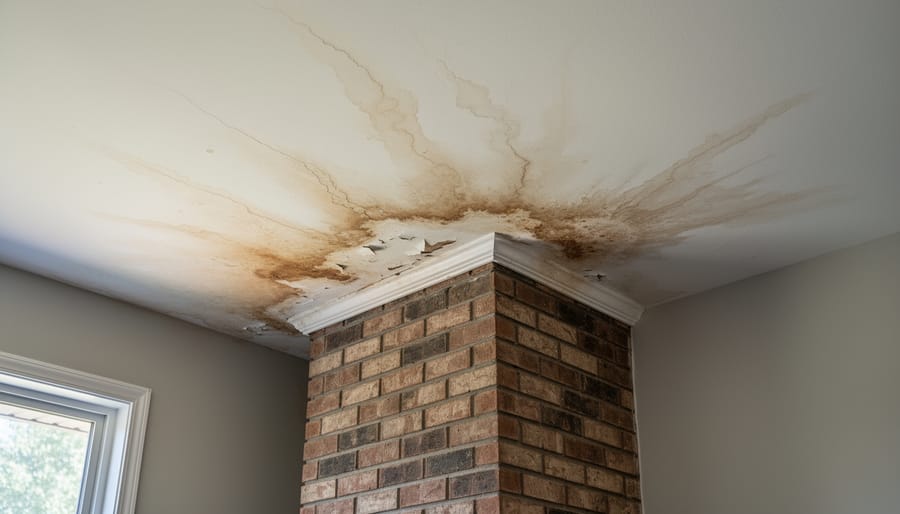
Water staining on ceilings near the chimney, rust marks on the fireplace damper, and musty odors in the living room all point to one critical problem: compromised chimney flashing. This protective metal barrier where the chimney meets the roof serves as the primary defense against water infiltration, yet it remains one of the most vulnerable points in any roofing system. When flashing fails—whether through improper installation, weather damage, or simple age-related deterioration—water quickly finds pathways into the home, causing structural damage, mold growth, and costly repairs that escalate with every rainfall.
Canadian homeowners face particularly harsh conditions that accelerate flashing deterioration. Freeze-thaw cycles crack sealants, ice dams force water beneath metal barriers, and UV exposure degrades waterproofing compounds. Many insurance claims stem from undetected flashing failures that progressed from minor leaks to major structural issues. Professional assessment identifies whether step flashing, counter flashing, or base flashing requires attention, and modern waterproofing solutions extend far beyond the tar-and-caulk methods of decades past.
Understanding the warning signs, knowing when professional intervention becomes necessary, and implementing proper maintenance practices protect one of the home’s most significant investments. Whether addressing active leaks or preventing future damage, proper chimney flashing repair and waterproofing requires specialized knowledge of both roofing systems and moisture management. Homeowners ready to address these concerns can learn more about comprehensive chimney protection solutions tailored to Canadian climate challenges and insurance requirements.
What Is Chimney Flashing and Why It’s Your First Line of Defense
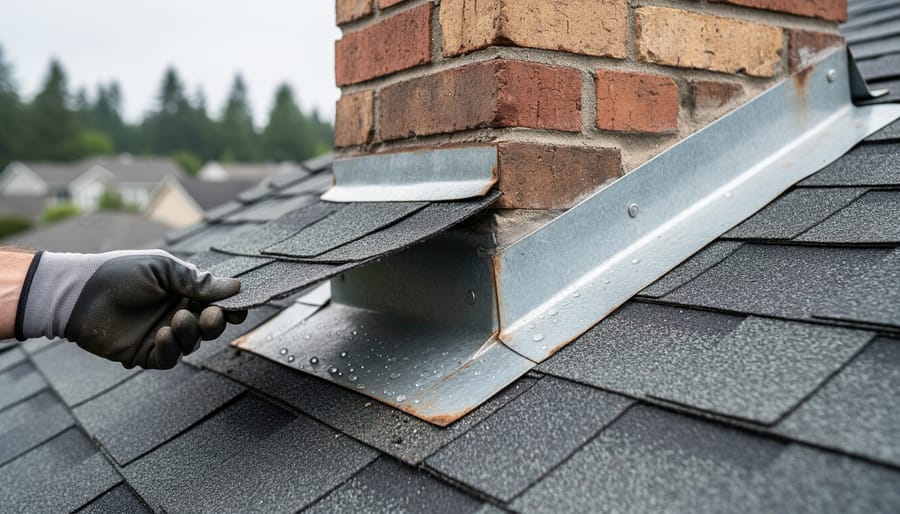
Chimney flashing serves as the critical waterproof barrier between your chimney structure and your roof, protecting one of your home’s most vulnerable intersection points from water infiltration. Think of it as a carefully engineered seal that bridges two different building materials—masonry and roofing—that naturally expand and contract at different rates.
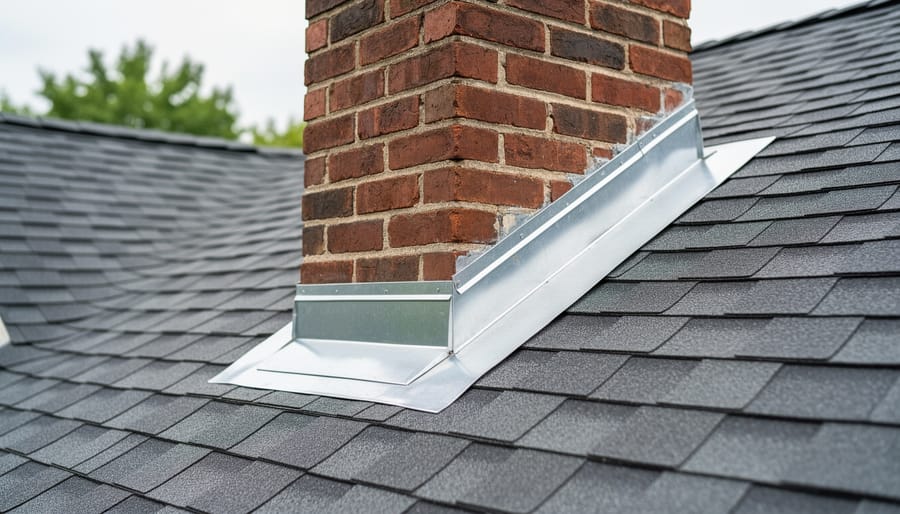
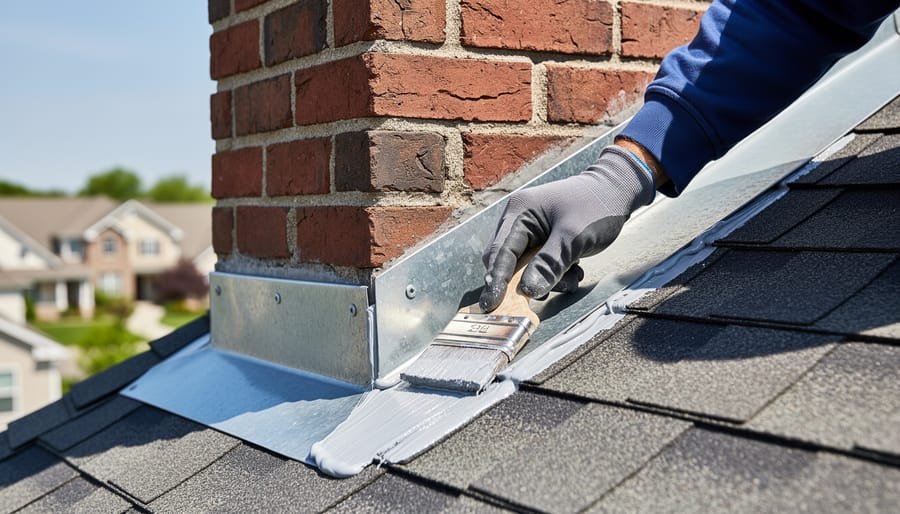
Properly installed chimney flashing consists of multiple integrated components working together. Base flashing sits at the foundation where the chimney meets the roof deck, creating the initial water barrier. Step flashing runs along the sides of the chimney, with individual pieces layered beneath each shingle course to channel water down and away from the chimney base. Counter flashing, embedded into the chimney mortar joints, overlaps the step flashing below, creating a two-layer defense system that accommodates movement while maintaining a watertight seal.
The anatomy of this system matters significantly because each component plays a specific role in managing water flow. When installed correctly, flashing directs moisture away from vulnerable seams and onto the roof surface where it can safely drain through your gutter system.
For Canadian homeowners, chimney flashing faces particularly demanding conditions. The country’s harsh freeze-thaw cycles create unique challenges that compromise flashing integrity over time. When water seeps into even tiny gaps in the flashing system, it freezes during cold snaps and expands, widening those gaps further. As temperatures rise, the ice melts and more water penetrates deeper into the structure. This repetitive cycle accelerates deterioration, making regular inspections essential.
Communities across Canada experience dozens of freeze-thaw cycles each winter, placing extraordinary stress on chimney flashing systems. What might be a minor gap in milder climates becomes a significant liability in Canadian weather. Understanding this vulnerability helps homeowners recognize why proactive maintenance and timely repairs protect not just the chimney, but the entire roof structure and interior spaces below from costly water damage that insurance claims frequently address.
The Warning Signs Your Chimney Flashing Needs Immediate Attention
Interior Red Flags
When chimney flashing fails, the evidence often appears inside the home long before exterior damage becomes obvious. Recognizing these warning signs early can prevent extensive structural damage and reduce repair costs.
Water stains on ceilings or walls near the chimney represent the most common interior indicator of flashing problems. These stains typically appear as yellowish or brownish discoloration and may expand after rainfall or snowmelt. Even small stains warrant immediate professional inspection, as they indicate active water penetration.
Peeling paint or wallpaper around the chimney area signals moisture intrusion behind wall surfaces. This deterioration occurs when water bypasses damaged flashing and saturates drywall or plaster. Homeowners may also notice a persistent musty odor near the chimney, indicating hidden moisture accumulation and potential mold growth.
Visible efflorescence—white, chalky deposits on interior masonry—demonstrates that water is moving through chimney materials, carrying dissolved salts to the surface. This crystalline buildup confirms ongoing moisture issues requiring prompt attention.
Canadian homeowners should document these interior signs with photographs and dates, as this evidence proves valuable when filing insurance claims. Many property insurance policies cover water damage from failed flashing, particularly when deterioration results from normal wear or severe weather events common across Canadian regions.
Exterior Damage Indicators
Recognizing exterior warning signs early can prevent extensive water damage and costly repairs. Homeowners should regularly inspect their chimney and surrounding roof area for visual indicators of compromised flashing.
Rust stains or discoloration on the chimney exterior often signal that water has penetrated behind the flashing. These brownish-orange streaks typically appear where metal flashing meets masonry, indicating that moisture is seeping through deteriorated seals. Similarly, white powdery residue, known as efflorescence, appears on brick or stone when water carries salts to the surface, suggesting chronic moisture problems.
Gaps or separation between the flashing and chimney structure are clear red flags. Over time, temperature fluctuations cause expansion and contraction, which can pull flashing away from the chimney. Even small openings allow water infiltration during rainstorms or snowmelt, particularly during Canadian freeze-thaw cycles that accelerate deterioration.
Damaged or missing mortar in the chimney crown provides another entry point for water. When the crown develops cracks, water travels downward and compromises flashing connections. Buckled, bent, or corroded flashing material indicates structural failure requiring immediate attention.
Lifted or missing shingles around the chimney base also suggest flashing issues. When water penetrates beneath the roofing material, it loosens the surrounding shingles and compromises the entire waterproofing system.
Canadian homeowners should document these indicators with photographs, as insurance claims often require visual evidence of damage progression. Professional roofing contractors can assess whether observed damage qualifies for insurance coverage while preventing further deterioration through timely repairs.
Common Causes of Chimney Flashing Failure in Canadian Homes
Climate-Related Damage
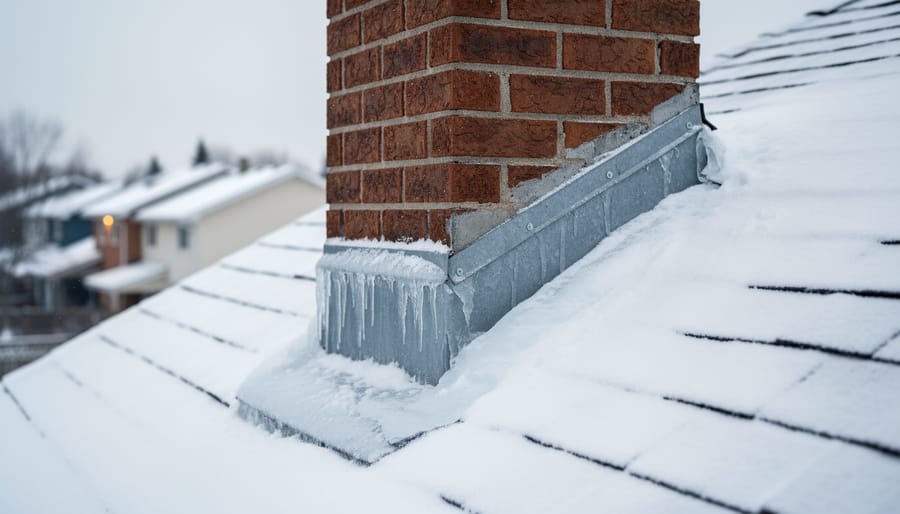
Canada’s harsh winter climate presents unique challenges for chimney flashing systems. The freeze-thaw cycle that characterizes Canadian winters creates one of the most damaging forces affecting flashing integrity. When water seeps into small gaps or hairline cracks in the flashing, it expands by approximately 9% as it freezes. This expansion exerts tremendous pressure on the metal and surrounding materials, gradually widening existing gaps and creating new vulnerabilities. As temperatures rise above freezing, the ice melts, allowing more water to penetrate deeper into the compromised areas. This cyclical process repeats throughout winter and during seasonal transitions, accelerating deterioration.
Ice accumulation around the chimney base compounds these problems. Ice dams that form on roofs can force water beneath shingles and flashing, pushing it into areas designed to remain watertight. The weight of accumulated snow and ice also places physical stress on flashing components, potentially loosening fasteners or warping the metal.
Temperature extremes further compromise flashing materials. Metal flashing expands in summer heat and contracts during winter cold, causing fatigue in the material over time. This constant movement can break down sealants, separate joints, and create openings for water infiltration. Older flashing systems particularly struggle with these temperature swings, as aging materials lose their flexibility and become more prone to cracking.
Property owners should recognize that climate-related damage often develops gradually, making regular professional inspections essential for identifying problems before they result in costly interior water damage requiring insurance claims.
Installation and Material Issues
Many chimney flashing failures trace back to issues that occur during initial installation or result from substandard materials. Understanding these problems helps homeowners recognize when professional intervention becomes necessary and may support insurance claims for water damage repairs.
Poor workmanship represents one of the most common culprits behind premature flashing failure. When contractors rush through installations or lack proper training, they may create gaps between the flashing and chimney, use inadequate sealant, or fail to secure the flashing properly to both the roof and masonry. These shortcuts leave vulnerable entry points for water infiltration that worsen with every rainfall.
Material quality significantly impacts flashing longevity. Budget-grade flashing corrodes faster under Canadian weather conditions, particularly in regions experiencing harsh winters with freeze-thaw cycles. Galvanized steel, while economical, deteriorates more quickly than copper or stainless steel alternatives. Some contractors combine incompatible metals, creating galvanic corrosion that accelerates breakdown. Additionally, using standard caulking instead of specialized roofing sealants leads to premature cracking and separation.
Age-related deterioration affects even properly installed systems. Flashing materials expand and contract with temperature fluctuations, eventually causing fatigue cracks. UV exposure degrades sealants over time, while repeated freeze-thaw cycles stress both metal and mortar joints. Older homes may have outdated flashing designs that no longer meet current building codes or waterproofing standards.
Recognizing these installation and material deficiencies early allows property owners to address problems before extensive water damage occurs, potentially qualifying repairs under insurance coverage when documented properly by qualified professionals.
Professional Chimney Flashing Repair: What to Expect
The Inspection and Assessment Phase
A comprehensive professional assessment begins with a detailed exterior examination of the chimney structure and surrounding roofing materials. Certified inspectors examine the condition of existing flashing, checking for visible cracks, rust, separation from the chimney or roof surface, and signs of deteriorated sealant. They also assess whether the flashing was installed correctly in the first place, as improper installation is a common source of water infiltration problems.
Interior inspections are equally important. Professionals look for water stains on ceilings near the chimney, moisture in the attic space, and damaged insulation that indicates active leaks. In Canada’s freeze-thaw climate, inspectors pay particular attention to ice dam damage and expansion cracks that worsen during winter months.
Documentation through photographs and detailed reports helps homeowners understand the extent of repairs needed and supports insurance claims when water damage has occurred. This thorough evaluation ensures all underlying issues are addressed, not just visible symptoms, preventing recurring problems and protecting the home’s structural integrity.
Repair Techniques and Materials
Modern chimney flashing repair relies on several proven techniques and materials specifically designed to withstand Canada’s demanding climate conditions. Understanding these options helps homeowners make informed decisions when addressing flashing failures and water infiltration issues.
Step flashing replacement remains the most comprehensive repair method for severely damaged systems. This technique involves removing deteriorated flashing sections and installing new L-shaped metal pieces that interweave with roofing shingles. For Canadian homes, galvanized steel, aluminum, or copper flashing provides the durability needed to resist freeze-thaw cycles and temperature extremes. Copper, while more expensive initially, offers exceptional longevity and naturally resists corrosion, making it a cost-effective choice for long-term protection.
Counter flashing repairs address the junction where flashing meets the chimney masonry. Professional contractors embed new counter flashing into mortar joints or install surface-mounted systems when reglet cuts aren’t feasible. This two-part flashing system (step flashing and counter flashing working together) creates overlapping layers that direct water away from vulnerable areas.
When existing flashing remains structurally sound but shows minor deterioration, high-quality sealants offer effective interim solutions. Professional-grade polyurethane or silicone-based products formulated for exterior use maintain flexibility through temperature fluctuations, preventing crack formation during winter months. However, sealants should be viewed as temporary measures rather than permanent solutions, typically lasting three to five years before requiring reapplication.
For homeowners navigating insurance claims, documentation of repair methods and materials becomes essential. Many insurance providers require detailed estimates specifying material grades and installation techniques. Working with contractors experienced in insurance processes ensures proper documentation and appropriate material selection that meets policy requirements.
Membrane flashing systems represent newer technology gaining popularity in Canadian markets. These self-adhesive, rubberized products conform to irregular surfaces and provide seamless waterproofing. When combined with traditional metal flashing, membrane systems create redundant protection layers particularly valuable in regions experiencing heavy snowfall and ice dam formation.
Professional contractors assess each chimney’s unique conditions, considering factors like roof pitch, chimney size, local weather patterns, and building code requirements before recommending specific repair approaches and materials suited to long-term performance.
Waterproofing Strategies to Extend Flashing Lifespan
While proper chimney flashing installation forms the foundation of leak prevention, a comprehensive waterproofing strategy significantly extends the lifespan of both the flashing and the entire chimney system. Canadian homeowners can avoid costly emergency repairs by implementing complementary protective measures that work together to create multiple barriers against water infiltration.
High-quality sealants play a crucial role in chimney waterproofing. Elastomeric sealants designed specifically for masonry applications provide flexibility to accommodate seasonal expansion and contraction caused by Canada’s extreme temperature fluctuations. These specialized products maintain their integrity through freeze-thaw cycles that would cause standard caulking to crack and fail. Professional roofers apply these sealants at critical junctions where the flashing meets the chimney, creating a secondary defense line that reinforces the primary flashing system.
Waterproof membranes offer another layer of protection, particularly beneath the flashing itself. Self-adhesive rubberized membranes bond directly to the roof deck, creating an impenetrable barrier even if water manages to bypass the visible flashing. This preventive approach has proven especially valuable in regions experiencing heavy snowfall and ice dam formation, which can force water under traditional flashing through capillary action.
The chimney crown, that concrete cap at the top of the chimney structure, deserves equal attention in any waterproofing strategy. Cracks in the crown allow water to penetrate the chimney’s interior, causing deterioration that eventually compromises the flashing connections. Professional crown repair involves filling cracks with appropriate masonry sealants and applying waterproof coatings that shed water away from the chimney structure. Many insurance claims for water damage originate from neglected crown maintenance, making this a critical preventive measure.
Finally, proper roof drainage cannot be overlooked. Well-functioning eavestroughs and downspouts direct water away from the chimney base, reducing the volume of water that flashing systems must manage. Addressing drainage issues early prevents the overwhelming water exposure that leads to premature flashing failure.
By investing in these complementary waterproofing measures, Canadian property owners protect their homes while building equity in long-term structural integrity rather than facing unexpected emergency repair costs.
When Insurance Covers Chimney Flashing Repair
Understanding when insurance covers chimney flashing repair can help homeowners navigate the claims process more effectively and potentially save thousands of dollars in repair costs. Canadian home insurance policies typically distinguish between sudden, accidental damage and gradual deterioration, making it essential to recognize which scenarios qualify for coverage.
Most insurance policies cover chimney flashing repairs when damage results from sudden, unexpected events. Storm damage from high winds, hail, or falling tree branches generally qualifies for coverage. Similarly, sudden structural failures caused by heavy snow loads or ice damming may be covered. Water damage that occurs as a direct result of these covered events is also typically included in claims. The key factor is that the damage must be accidental and occur within a specific timeframe rather than developing slowly over years.
Conversely, insurance companies typically deny claims for gradual deterioration, normal wear and tear, or deferred maintenance. Flashing that has slowly corroded due to age, developed rust over several seasons, or failed because of missed inspections and routine maintenance usually falls outside policy coverage. This distinction emphasizes the importance of regular maintenance and timely repairs to protect both the home and insurance eligibility.
When filing a claim, documentation becomes critical. Homeowners should photograph all visible damage immediately after discovery, including close-ups of the flashing, water stains, and any interior damage. Keeping records of previous inspections and maintenance work demonstrates responsible homeownership and can strengthen claims. Obtaining a professional assessment from a qualified roofing contractor experienced in insurance work provides the technical documentation adjusters require.
Working with contractors who understand insurance claim processes streamlines the experience significantly. These professionals provide detailed written estimates that align with insurance requirements, communicate directly with adjusters when needed, and document repair work thoroughly. They can also identify whether damage classification truly falls under covered perils or maintenance issues, helping homeowners set realistic expectations before filing claims. Many contractors serving Canadian communities have extensive experience navigating regional insurance providers and understanding local policy variations, making them valuable partners throughout the claims process.
Preventive Maintenance: Protecting Your Investment Year-Round
A proactive maintenance schedule represents the most cost-effective approach to protecting chimney flashing and preventing water damage. Canadian homeowners who invest in regular inspections typically save thousands of dollars by addressing minor issues before they escalate into emergency repairs requiring extensive restoration work.
Spring and fall inspections form the foundation of effective preventive care. Spring assessments should focus on identifying damage caused by winter freeze-thaw cycles, including cracks in sealant, separated flashing, and deteriorated mortar joints. Fall inspections prepare chimneys for harsh winter conditions by ensuring all waterproofing measures remain intact and flashing connections stay secure.
Gutter maintenance directly impacts flashing longevity. Clogged gutters cause water overflow that saturates flashing joints and accelerates deterioration. Cleaning gutters twice annually prevents water accumulation that compromises waterproofing systems and creates ice dam conditions during winter months.
Debris removal around chimney bases prevents moisture retention against flashing materials. Leaves, branches, and accumulated sediment trap water against vulnerable joints, promoting rust formation in metal flashing and degrading sealant compounds. Simple quarterly clearing of this debris significantly extends flashing lifespan.
Professional assessments every three to five years provide comprehensive evaluations beyond visual inspections. Certified contractors identify hidden deterioration, test waterproofing effectiveness, and recommend preventive measures before problems develop. This professional expertise becomes particularly valuable for insurance claims documentation, as regular maintenance records demonstrate responsible property stewardship.
The cost difference between preventive maintenance and emergency repairs proves substantial. Annual inspections and minor maintenance typically cost several hundred dollars, while emergency flashing replacement and water damage restoration often exceed five thousand dollars. This financial reality makes prevention the wisest investment strategy for protecting property value.
Addressing chimney flashing issues promptly represents one of the most cost-effective decisions a property owner can make. When water infiltration goes unchecked, minor flashing deterioration quickly escalates into expensive structural repairs affecting roof decking, insulation, interior ceilings, and even foundation elements. The reality is that protecting home value requires vigilance, and the chimney-roof junction remains a common vulnerability that demands regular attention.
Proactive inspection proves far more economical than reactive repairs. Canadian homeowners benefit from scheduling professional chimney flashing assessments at least annually, particularly following harsh winter conditions or severe weather events. These evaluations identify compromised sealants, corroded metal components, or deteriorating mortar joints before they allow moisture penetration.
Quality chimney flashing repair should be viewed as an investment rather than an expense. Professional waterproofing protects home value and structural integrity while preventing costly secondary damage that often exceeds the original repair cost by significant margins. Working with experienced local roofing specialists ensures repairs meet regional building codes and climate requirements specific to Canadian conditions.
Supporting community-based roofing expertise provides homeowners with accessible, accountable service backed by established reputations. Local professionals understand regional weather patterns, insurance claim procedures, and material performance in Canadian climates. This knowledge translates into reliable, lasting solutions that protect properties for decades. When flashing concerns arise, professional intervention delivers peace of mind and long-term protection that DIY approaches simply cannot match.