
What Is Eaves Repair (and Why Does Eavestrough Maintenance Matter)?
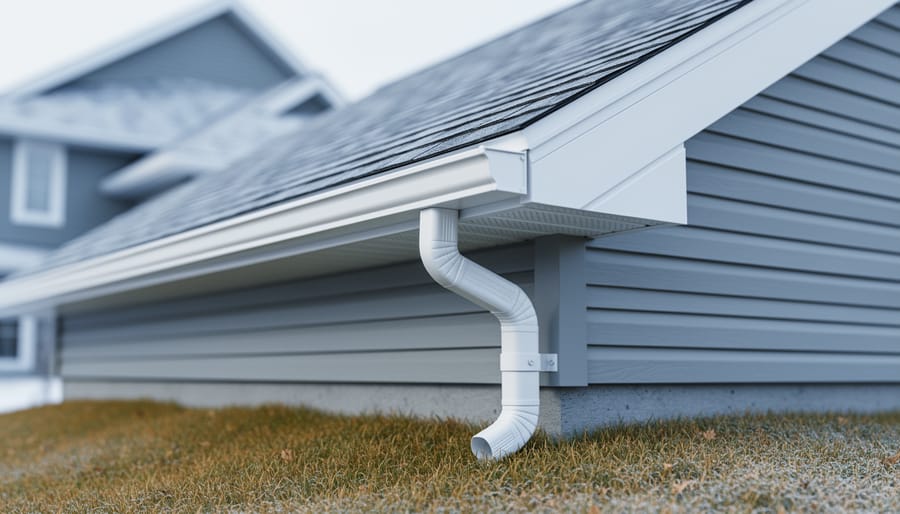
Eaves repair is the process of fixing or restoring the eavestroughs (the gutters along your roof’s edge), along with the fascia, soffits and downspouts that support them, so rainwater and meltwater are channelled away from your home instead of running down walls or pooling at the foundation. A typical repair might mean resealing a leaking seam, re-hanging a sagging section, replacing rotted fascia behind the trough, or clearing a blocked downspout.
In Canada, this small system does heavy lifting. Freeze-thaw cycles, ice dams and heavy snow loads push eavestroughs harder than most homeowners realize, and a minor crack in November can become a damaged fascia board, water-stained soffit or wet basement by spring. Catching problems early is almost always cheaper than waiting.
This guide explains how eavestroughs work, the warning signs that point to repair rather than full replacement, and the maintenance habits that extend their life. It also covers how storm and ice damage can fit into an insurance claim, an area where careful documentation makes a real difference. As a roofing contractor rooted in the communities we serve, Canadian Roofs & Co. wants homeowners to understand their options clearly before they make a call.
What Eaves Repair Means and Why the Eavestrough System Matters
How an Eavestrough System Works
An eavestrough system works like a small drainage network built into the edge of your roof. When rain or melting snow runs down the roof surface, it reaches the eaves and drops into the eavestrough, the channel that catches it. From there, the water travels along the trough to an outlet, drops through a downspout, and is released at ground level, ideally well away from the house.
Gravity does the work, so slope matters. A trough is set with a gentle tilt toward the downspout, and the discharge point should also carry water in a direction that helps it slope away from foundation walls. Hangers, the brackets that hold the trough to the fascia, keep that tilt steady under the weight of water, ice and debris. Seams join sections together, and end caps seal the open ends so water stays in the channel.
Here are the key terms in plain language:
- Eaves
- The part of the roof that overhangs the exterior walls.
- Eavestrough
- The Canadian word for a gutter, the channel that collects roof runoff.
- Downspout
- The vertical pipe that carries water from the trough down to ground level.
- Fascia
- The board along the roof edge that the eavestrough attaches to.
- Soffit
- The underside of the overhang, which often includes vents for attic airflow.
- Drip edge
- Metal flashing at the roof’s edge that guides water into the trough instead of behind it.
Because every piece depends on the others, one weak point affects the whole system. A loose hanger changes the slope, a leaking seam drips onto siding, and a missing end cap sends water over the edge. Even a blocked downspout can cause the full length of trough to overflow.
Why Eavestrough Maintenance Importance Is Greater in Canadian Climates
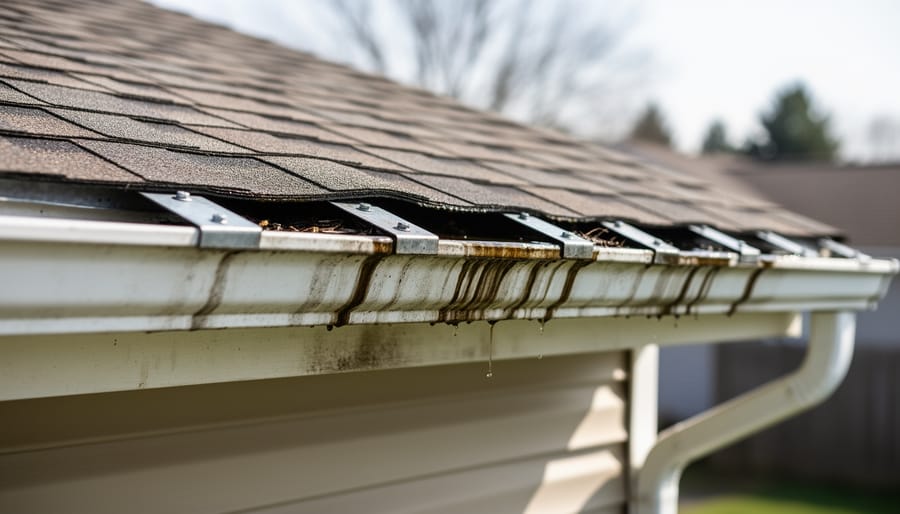
Canada’s weather puts more stress on an eavestrough system than most climates do. A clogged or damaged system that might cause minor annoyance in a mild region can lead to real damage here, because water doesn’t just fall and drain away. It freezes, thaws, and freezes again.
When an eavestrough can’t carry water away properly, the first consequence is often pooling near the foundation. Saturated soil next to a basement wall can contribute to dampness, seepage and, over time, movement or cracking. Overflowing water also runs down siding, staining it and encouraging moisture problems, while washing out landscaping beds below. At the roofline, constant dampness can rot fascia and soffit boards, which are the trim and underside panels along the roof edge. Once those boards soften, they can let pests such as squirrels, birds and insects find a way into the attic space.
Winter adds its own risks. Freeze-thaw cycles expand and contract metal, loosen fasteners and widen small cracks. A trough full of debris and ice also adds weight, and heavy snow load can pull sections away from the house. Ice damming is a particular concern. When meltwater refreezes at the cold edge of the roof, it can back up under shingles and find its way into walls and ceilings, causing interior leaks. Spring melt then sends a sudden volume of water through the system, which is exactly when a blocked or sagging run shows its weakness.
Regular upkeep also supports long-term property value and energy efficiency. Dry fascia, soffits and attic spaces help insulation perform as intended, while a sound roofline keeps a home looking cared for. Results always depend on the condition of the building and the severity of the weather, but consistent attention to the eavestrough system is one of the most practical ways to protect everything beneath it.
Common Eavestrough and Eaves Problems and Their Repairs
Most eaves trouble starts small and shows up in familiar ways. Knowing what each problem looks like, and what repair usually fixes it, helps you act before water finds its way into the structure.
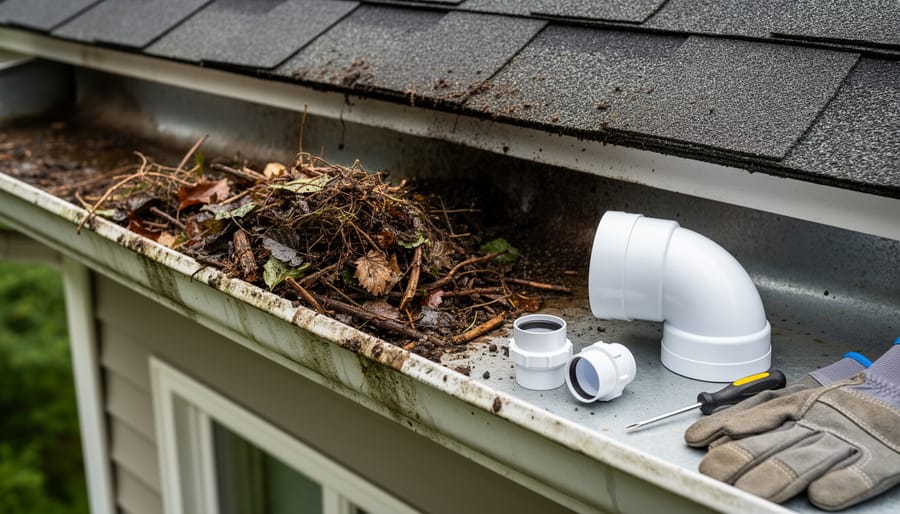
- Clogs and debris buildup: leaves, shingle grit and seeds block flow and cause overflow; the fix is a thorough cleaning and a flush of the downspouts.
- Sagging or pulled-away sections: the eavestrough droops or separates from the roofline, so it gets re-hung with new hangers or fasteners set into solid backing.
- Leaking seams and joints: drips appear where two pieces meet, and the repair is cleaning the joint and resealing it with a suitable gutter sealant.
- Improper slope: water sits in the trough instead of draining, which calls for re-sloping so it falls gently toward the downspout.
- Rusted or cracked sections: metal flakes, pits or splits, and a damaged section is usually cut out and replaced rather than patched again and again.
- Loose or damaged downspouts: the pipe sways, dents or discharges too close to the house, so it is re-secured, replaced or extended away from the foundation.
- Rotted fascia or soffit boards: soft, stained or peeling wood needs the affected boards repaired or replaced before the eavestrough is reattached.
A few of these terms are worth unpacking. The fascia is the board that runs along the roof’s edge and carries the eavestrough, while the soffit is the underside of the overhang that often provides attic ventilation. Because the eavestrough hangs from the fascia, a weak or rotted board can undermine an otherwise sound system.
Problems also tend to overlap. A clog can add weight that pulls a section loose, and a poor slope can leave standing water that speeds up rust and seam failure. That is why a repair that only treats the visible symptom often fails to last. In Canada, ice and snow load add stress to hangers and joints, so weak points that seem minor in fall can become real damage by late winter.
A careful inspection of the whole roofline, rather than a single leaking corner, gives the clearest picture of what needs attention and in what order.
When Repair Is Enough and When Replacement Makes Sense
Repair usually makes sense when the damage is limited and the rest of the system is sound. A single leaking seam, a loose hanger, or one dented section can often be fixed without touching the rest. Replacement becomes the better choice when problems keep returning, when rust or cracking spreads across several runs, or when sections have pulled away because the underlying boards can no longer hold fasteners.
Age and material play a big part. Aluminum is common because it resists rust and is lightweight, while steel is stronger but can corrode once its coating wears through. Copper is long-lasting and prized for its look, and vinyl is affordable but can turn brittle in extreme cold. Each handles Canadian freeze-thaw cycles differently, so a system near the end of its service life may cost more to keep patching than to renew.
The condition of the fascia and soffit matters just as much. If those boards are soft or rotted, new eavestroughs have nothing solid to attach to, and the fix has to start there. It also helps to look at the whole roofline together. A home approaching the end of its roof lifespan may benefit from coordinating eaves work with roofing work, and comparing the shingle replacement cost against separate, piecemeal repairs can show where the savings really are.
Because hidden damage is common at the roof’s edge, an on-site assessment by a qualified contractor gives the clearest answer.
Eavestrough Maintenance Habits That Protect the Roofline
Consistent upkeep is the simplest way to keep small roofline problems from turning into costly repairs. A basic routine, repeated each year, covers most of what an eavestrough system needs.
Plan on two thorough cleanings: one in spring, after the snow melts and debris has settled, and one in fall, once the leaves have dropped. Between those, a quick look after a major storm, heavy wind or ice event can catch shifted sections early. While cleaning, run water through the system to confirm it drains freely and that each downspout carries water well away from the foundation.
- Clear leaves, shingle grit and debris from the eavestrough and downspouts each spring and fall.
- Inspect seams, end caps and fasteners for gaps, loose hangers or sagging sections.
- Check that downspouts discharge several feet from the foundation and are not blocked or disconnected.
- Trim overhanging branches that drop debris or scrape the roofline.
- Watch for overflow during rain, peeling paint, staining or water marks on fascia and siding.
Any of those warning signs is worth investigating promptly, since they often point to a leak, poor slope or moisture reaching the fascia and soffit.
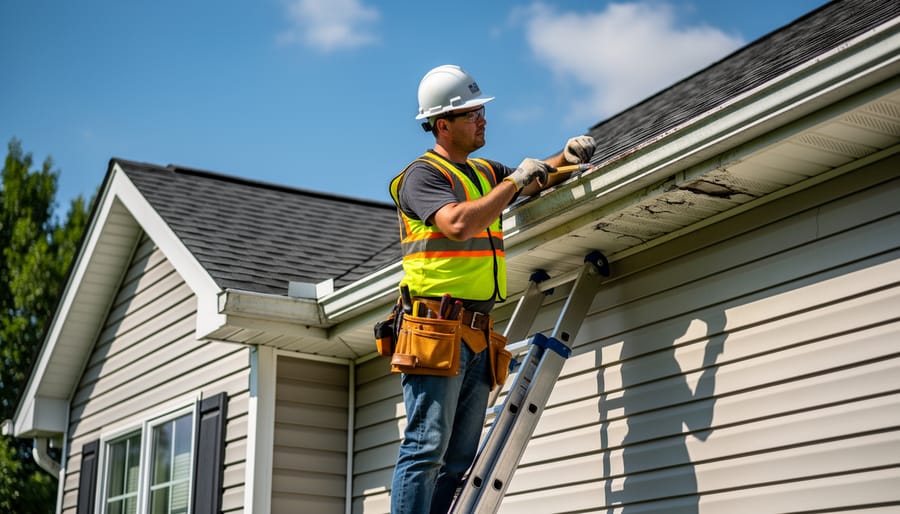
Safety matters here. Working on a ladder near the roof edge carries real risk, especially on multi-storey homes, steep rooflines or icy surfaces. For anything beyond ground-level checks, a qualified contractor can inspect, clean and repair the system safely, and spot hidden damage a quick glance might miss.
Eaves Damage and Insurance Claims
When storms, high winds, heavy ice or fallen branches damage an eavestrough or the eaves behind it, the repair may be tied to your home insurance policy. A section torn loose by an ice dam, a downspout crushed by a falling limb, or fascia boards split during a windstorm are the kinds of sudden events that homeowners often raise with their insurer. Gradual deterioration from age, rust or years of skipped maintenance is usually treated differently, which is one more reason regular upkeep matters.
Because coverage varies from policy to policy, it helps to read your terms before trouble arrives. Look at what types of weather damage are included, what your deductible is, and what your insurer expects from you after an event. Acting quickly also matters. Photograph the damage from several angles, note the date and weather conditions, and keep any receipts for temporary repairs that prevent further harm, such as tarping an exposed roof edge. Clear records make the conversation with an adjuster far more straightforward.
This is an area where an experienced contractor adds real value. Canadian Roofs & Co. has guided clients through the process of insurance claims alongside their roofing and construction projects, helping property owners understand what needs to be documented and what the repair scope looks like. No contractor can promise a particular claim outcome, since that decision rests with the insurer, but clear documentation and a professional assessment give you a stronger starting point.
The company is also deeply rooted in the communities it serves. Its give back initiatives reflect a commitment to supporting local property owners well beyond a single repair job.
Eavestrough Repair Questions Homeowners Often Ask
How often should eavestroughs be cleaned?
Most homes benefit from cleaning at least twice a year, typically in spring and fall. Properties surrounded by mature trees may need more frequent attention, and a quick check after major storms is a good habit.
What are the signs that eavestrough repair is needed?
Watch for overflow during rain, sagging or pulled-away sections, leaking seams, peeling paint or staining along the roofline, and water pooling beside the foundation. Any of these suggests the system is no longer directing water where it should.
Can eavestrough problems affect the foundation?
Yes, they can. When water spills over the edge or exits a damaged downspout close to the house, it may collect near the foundation, which can contribute to moisture issues and, over time, more serious structural concerns.
What role do fascia and soffit play?
The fascia is the board that eavestroughs attach to, and the soffit is the underside of the roof overhang that helps ventilate the attic. If either one is rotted or damaged, the eavestrough may lose its support and the roofline can be left open to moisture and pests.
Many homeowners also wonder whether eaves repairs and roofing work should be handled together. In many cases, coordinating them makes practical sense, since the roof edge, shingles, fascia, soffit and eavestroughs all work as one system. Addressing them in a single project can reduce disruption, help avoid overlapping work, and give a qualified contractor a full view of how water is actually moving across the roofline.
Taking care of the roofline is one of the simplest ways to protect everything beneath it. Timely eaves repair keeps water moving away from the foundation, siding and landscaping, and it stops small issues like a loose hanger or a leaking seam from turning into rotted fascia, ice damming or interior moisture. Add a steady maintenance routine, with seasonal cleaning, quick checks after storms and attention to early warning signs, and the whole system works the way it was designed to, season after season.
When damage goes beyond a simple cleaning, a professional assessment gives you a clear picture of what needs fixing and what can wait. Canadian Roofs & Co. brings that experience to homeowners and business owners across the community, whether the job involves eavestroughs, roofing, siding or insulation, and can help you plan next steps with confidence.