
Who Runs Boilers and HVAC Plant in Ontario Commercial Buildings: Operators, Licensing, and Requirements
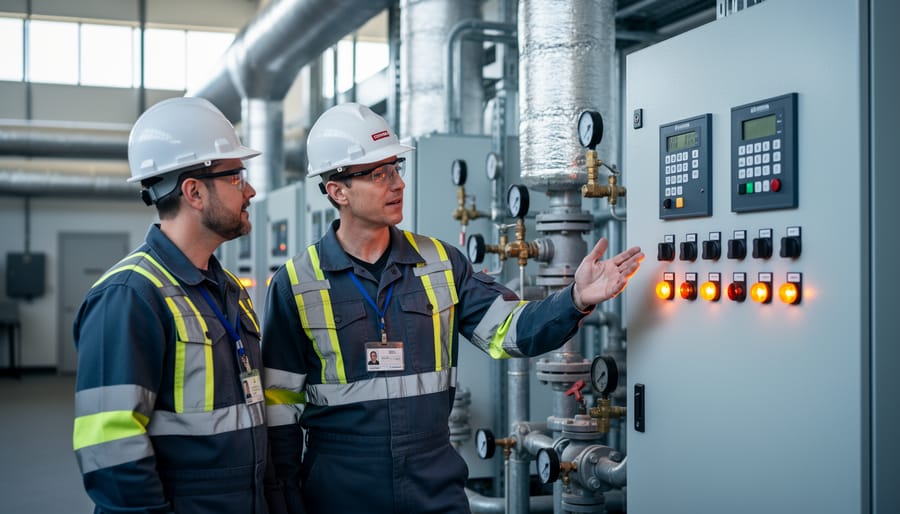
In Ontario, commercial building boilers and HVAC plant equipment must be operated by individuals holding valid Technical Standards and Safety Authority (TSSA) Operating Engineer certificates. The specific class of certificate required depends on the boiler’s heating capacity and system complexity, with Class 1 operators authorized for the largest industrial systems and Class 4 for smaller commercial applications. Building owners and facility managers are legally responsible for ensuring only properly certified personnel operate their heating systems, with penalties for non-compliance including fines and potential shutdown orders.
This regulatory framework exists to protect public safety and prevent equipment failures that could result in property damage, carbon monoxide incidents, or catastrophic boiler malfunctions. The TSSA, operating under Ontario’s Technical Standards and Safety Act, 2000, maintains strict oversight of pressure vessel operations across the province. For commercial property owners, understanding these requirements isn’t just about legal compliance. It directly affects insurance coverage, operational efficiency, and the long-term reliability of heating systems that represent substantial capital investments.
The certification system also creates clear career pathways for building operators, with progressive licensing levels that reflect increasing responsibility and technical knowledge. Whether managing a small office building or a large commercial complex, knowing who can legally run your HVAC plant protects your investment and ensures uninterrupted comfort for occupants.
Operating Engineers: The Professionals Behind Commercial HVAC Systems
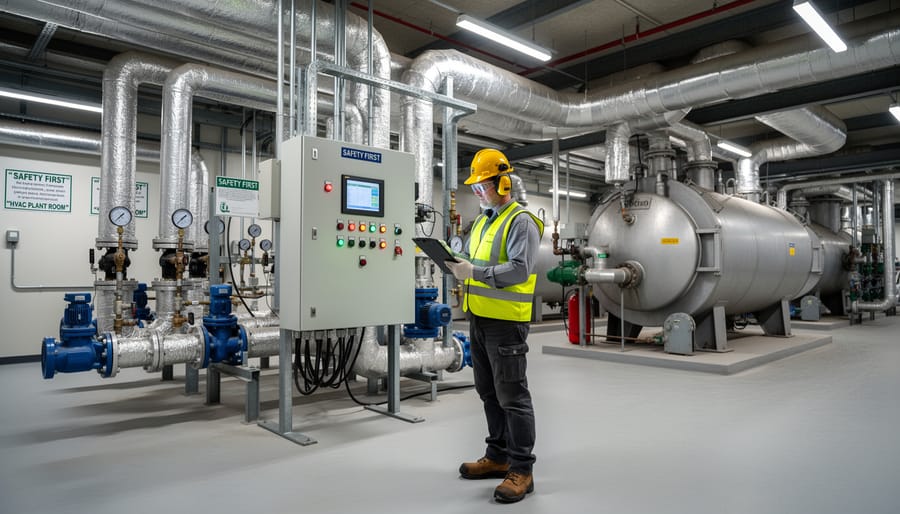
Operating Engineers are certified professionals trained to operate and maintain complex mechanical systems in commercial and industrial facilities. In Ontario, these specialists manage boilers, pressure vessels, refrigeration equipment, and associated HVAC plant machinery that keeps office towers, hospitals, shopping centres, and other large buildings running safely and efficiently. Their expertise covers both the technical operation of equipment and the safety protocols required to prevent malfunctions, minimize energy waste, and ensure occupant comfort.
The scope of an Operating Engineer’s work extends well beyond simply turning systems on and off. They continuously monitor equipment performance, adjust controls to optimize efficiency, perform routine maintenance tasks, and troubleshoot problems before they escalate into costly breakdowns. When a heating system fails during January or a cooling plant struggles in August, Operating Engineers diagnose issues quickly and coordinate repairs to restore service. They also maintain detailed logs of equipment operation, fuel consumption, and maintenance activities, documentation that becomes crucial during regulatory inspections.
Ontario mandates licensed Operating Engineers for commercial buildings because boilers and pressure systems pose serious safety risks. A malfunctioning boiler can explode, poorly maintained combustion equipment can produce deadly carbon monoxide, and refrigeration systems may leak harmful substances. The province’s regulatory framework, enforced through the Technical Standards and Safety Authority (TSSA), requires that anyone operating this equipment hold appropriate certification. This licensing system ensures operators understand pressure vessel dynamics, combustion principles, refrigeration cycles, water treatment chemistry, and emergency shutdown procedures, knowledge that candidates demonstrate through the TSSA exam guide requirements and practical experience.
Emergency response falls squarely within an Operating Engineer’s responsibilities. When alarms sound, pressure readings spike, or equipment behaves abnormally, these professionals must assess the situation immediately and take appropriate action, whether that means adjusting controls, executing an emergency shutdown, or coordinating with fire services. Their decisions during critical moments can prevent equipment damage, protect building occupants, and avoid regulatory violations that carry significant penalties for building owners.
TSSA Licensing Requirements for Operating Engineers
The Technical Standards and Safety Authority oversees all power engineer certification in Ontario, establishing the legal framework that determines who can operate commercial boilers and HVAC plant equipment. Building owners cannot simply assign these duties to any maintenance worker, TSSA regulations mandate specific certification levels based on equipment capacity and complexity.
Operating Engineer certificates in Ontario range from 5th Class (entry level) to 1st Class (highest qualification), plus Special Class for specific equipment types. Each class authorizes operation of increasingly powerful and complex systems, with strict capacity thresholds that align directly with commercial building requirements.
| Certificate Class | Maximum Equipment Capacity | Typical Building Types | Training Duration |
|---|---|---|---|
| 5th Class | Up to 2,000 kW or 6,000 kg/hr steam | Small offices, retail buildings, apartment complexes | 6-12 months |
| 4th Class | Up to 5,000 kW or 15,000 kg/hr steam | Mid-size commercial buildings, schools, warehouses | 12-18 months |
| 3rd Class | Up to 10,000 kW or 30,000 kg/hr steam | Large office towers, hospitals, shopping centres | 18-24 months |
| 2nd/1st Class | Unlimited capacity | Major institutional campuses, industrial facilities, central heating plants | 24-48 months |
The certificate class required for a specific building depends on the combined capacity of all boilers and pressure vessels in the facility. A commercial building with a single 3,500 kW boiler needs at least a 4th Class operator on staff or under contract. If that same building later adds a second boiler bringing total capacity to 5,200 kW, regulations now require a 3rd Class certificate holder.
Special Class certificates exist for operators who work exclusively with hot water heating systems or specific equipment configurations. These allow operation of defined equipment types without progressing through the full class system, though they limit what systems the holder can legally run.
TSSA enforces these requirements through regular inspections and compliance audits. Certificates are not interchangeable, a 5th Class operator cannot legally supervise a 6,000 kW system even under emergency circumstances. Building owners who allow unqualified individuals to operate plant equipment face substantial penalties, potential insurance complications, and liability exposure if equipment failures occur.
The certification class system ensures that operators possess knowledge proportional to the risks they manage. Larger, more complex systems demand deeper understanding of thermodynamics, pressure vessel safety, water treatment, combustion efficiency, and emergency protocols. This tiered approach protects both building occupants and the operators themselves from the consequences of inadequate training.
How Building Owners and Managers Ensure Compliance
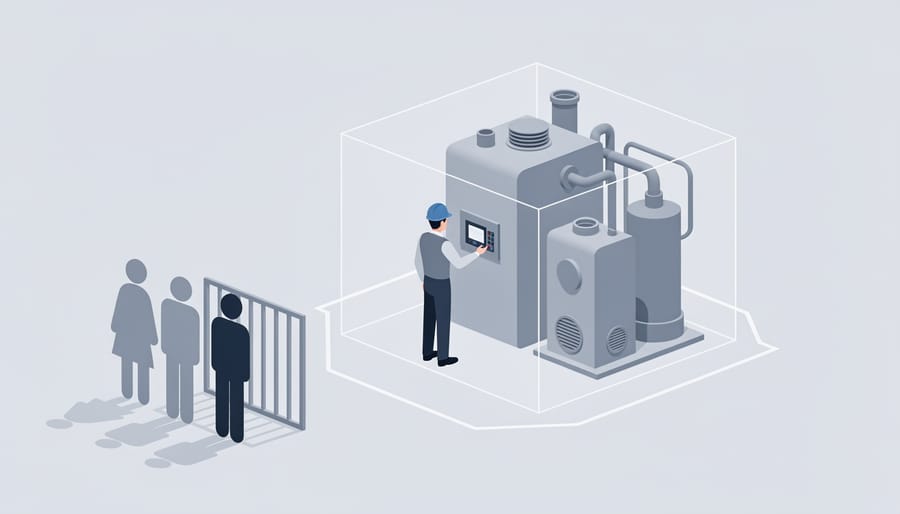
Commercial building owners and property managers carry direct legal responsibility for ensuring their HVAC plant operates under proper supervision. This obligation extends beyond simply hiring someone, it requires verifying credentials, maintaining documentation, and establishing systems that prevent compliance gaps.
The first step is confirming that any operator managing your boilers and HVAC equipment holds the appropriate class of Operating Engineer certificate for your building’s specifications. Building owners must request copies of TSSA certificates, verify they’re current (not expired), and ensure the class level matches or exceeds what your equipment requires. A 4th Class certificate won’t satisfy requirements if your boiler capacity demands a 3rd Class operator. Many owners maintain a file with copies of operator certificates, TSSA equipment registrations, and inspection records in case authorities request documentation during audits.
Building owners face a critical decision: hiring full-time in-house Operating Engineers or contracting with service companies that provide certified operators. In-house staff work exclusively for your building, developing intimate knowledge of your specific systems and providing immediate response to issues. This approach suits larger properties with complex HVAC plants requiring constant oversight. Contracted operators, conversely, visit on scheduled shifts, daily, several times per week, or as needed based on equipment demands and regulatory minimums. Smaller commercial buildings often find contracted services more cost-effective, though owners must ensure contracts specify adequate visit frequency and emergency availability.
Proper staffing levels matter significantly. If your building requires an operator on-site during all operating hours (common for certain high-capacity systems), you’ll need coverage for shifts, weekends, holidays, and vacation periods. Gaps in coverage create liability exposure and potential equipment damage. Some buildings employ multiple operators or maintain backup contracts to prevent lapses.
Operating without the required certification carries serious consequences. TSSA inspectors can issue orders requiring immediate cessation of equipment operation until qualified personnel are in place. This means potential building shutdowns, lost revenue, tenant disruptions, and substantial fines. Insurance complications also arise, many commercial policies contain clauses that may limit or deny claims if equipment was operated by unqualified personnel at the time of an incident. Beyond regulatory penalties, owners face civil liability if inadequate supervision contributes to equipment failure, property damage, or personal injury.
Documentation proves compliance. Maintain operator logbooks, maintenance records, and shift schedules that demonstrate continuous qualified oversight of your HVAC plant.
Training Pathways and Certification Process
Becoming a certified Operating Engineer in Ontario requires a combination of formal education, hands-on training, and successful completion of TSSA examinations. The pathway typically begins with enrolling in a technical college program that covers boiler operation, HVAC systems, thermodynamics, and safety protocols. Programs like those offered at Humber College, Centennial College, and Georgian College provide the foundational knowledge needed for entry-level certification.
Most aspiring Operating Engineers start by pursuing a 5th Class certificate, which requires completing an approved training program and accumulating workplace experience. The apprenticeship route combines classroom instruction with supervised on-the-job training under licensed operators. Apprentices gain practical experience with real boiler and HVAC systems while learning proper maintenance procedures, emergency protocols, and regulatory compliance.
Before taking the TSSA examination, candidates must meet specific experience requirements that vary by certificate class. A 5th Class certificate typically requires several months of documented training, while advancing to higher classes demands years of progressive experience. The TSSA maintains strict standards about what counts as qualifying experience and requires verification from supervising engineers or employers.
The TSSA examination tests both theoretical knowledge and practical understanding of boiler operations, safety systems, and provincial regulations. Pass rates vary by class, with higher-level certificates presenting significantly more challenging material. Candidates who fail can retake the exam after additional study and preparation.
Once certified, Operating Engineers must maintain their credentials through continuing education. TSSA requires certificate renewal every five years, which involves demonstrating ongoing employment in the field and completing refresher training. This ensures operators stay current with evolving technology, updated safety standards, and regulatory changes.
Many operators pursue progressive certification throughout their careers, moving from 5th Class to higher levels as they gain experience and seek responsibility for larger, more complex facilities. This career progression opens opportunities for supervisory roles, specialized facilities, and increased compensation in Ontario’s commercial building sector.
When Buildings Need Operating Engineers vs. Other Staff
Not every commercial building in Ontario requires a full-time, dedicated Operating Engineer. The determining factors include boiler capacity (measured in horsepower or kilowatts), HVAC system complexity, and building classification under provincial codes.
Buildings with high-pressure boilers exceeding specific capacity thresholds must have certified Operating Engineers on staff or under contract. Large office towers, hospitals, universities, and manufacturing facilities typically fall into this category due to their substantial heating and cooling demands. Facilities with critical operations, where data center HVAC systems run continuously or process equipment requires precise climate control, also need qualified operators to prevent costly downtime.
Smaller commercial buildings with low-pressure systems or those relying on packaged rooftop units may not require Operating Engineers at all. These properties often use general maintenance staff, building superintendents, or facilities managers who handle routine HVAC tasks like filter changes, thermostat adjustments, and basic troubleshooting. The key distinction: Operating Engineers are specifically trained and certified to manage pressure vessels and complex mechanical systems, while general maintenance staff typically lack this specialized qualification and legal authority.
When buildings fall into a grey area, needing occasional oversight but not daily monitoring, property managers often hire part-time or contract Operating Engineers. These professionals visit on scheduled intervals to inspect equipment, perform required tests, and sign off on compliance documentation. Some building management companies maintain a roster of certified operators who rotate between multiple properties.
The physical infrastructure matters too. Buildings where mechanical systems impact other critical components, such as how HVAC loads affect commercial roof life through rooftop unit placement, benefit from operators who understand these interconnections. TSSA regulations ultimately define who must operate specific equipment, but building owners should assess their actual needs beyond minimum compliance.
Common Questions About HVAC Plant Operations in Ontario
Do all commercial buildings in Ontario need a certified Operating Engineer?
Not all commercial buildings require full-time Operating Engineers. Buildings with smaller boilers (typically under 300 kW) and simpler HVAC systems may operate with general maintenance staff, while larger facilities with high-capacity boilers and complex plant equipment must have certified operators on-site during operational hours.
How can I verify an operator’s TSSA credentials?
Operating Engineer certificates include a unique license number and expiry date. You can request to see the physical certificate or contact TSSA directly to confirm an operator’s certification status, class level, and whether their credentials are current.
What happens during a TSSA inspection of our HVAC plant?
Inspectors review equipment maintenance records, verify that operators hold appropriate certifications for the installed equipment, check that safety procedures are documented and followed, and examine the physical condition of boilers and pressure vessels. Deficiencies must be corrected within specified timeframes depending on severity.
Who operates the boiler if our certified engineer is sick or on vacation?
Buildings must have contingency plans that include backup certified operators, either through cross-trained staff or contract arrangements with qualified professionals. The substitute operator must hold certification appropriate for your equipment class.
Building owners often wonder how system upgrades affect their operator requirements. Major ventilation upgrades or boiler replacements that increase capacity may trigger the need for higher-class certifications or additional operator coverage. Before starting such projects, consult with TSSA to determine whether your current staffing will meet post-upgrade requirements.
Renovations that involve HVAC modifications also intersect with broader construction compliance considerations. Any work that changes boiler capacity, adds pressure vessels, or reconfigures plant rooms may require permit applications and updated operating plans. Property managers should coordinate with their Operating Engineers during the design phase to ensure compliance continuity throughout construction.
The consequences of operating without proper certification extend beyond regulatory penalties. Insurance policies for commercial buildings typically require proof of qualified operators as a condition of coverage. A claim following an HVAC-related incident could be denied if the building was operating with uncertified staff at the time of the event.
Licensed Operating Engineers certified by the Technical Standards and Safety Authority are the professionals legally authorized to run boilers and HVAC plant in Ontario commercial buildings. This regulatory framework exists for good reason: proper certification ensures operators possess the technical knowledge and safety training to manage complex heating and cooling systems that serve building occupants daily.
Building owners cannot skip this requirement or substitute general maintenance staff for certified operators when their equipment capacity triggers TSSA licensing thresholds. The certification system protects both property investments and public safety by ensuring only qualified professionals control the critical systems that maintain comfortable, safe indoor environments.
At Canadian Roofs & Co., our commercial renovation and construction projects frequently involve coordination with building operators and mechanical systems. We understand how building envelope improvements, ventilation requirements, and HVAC considerations intersect during commercial property upgrades. This systems-level perspective helps us deliver renovation solutions that integrate properly with your building’s operational realities and regulatory obligations.