
Composite Deck Building Materials That Actually Last in Canadian Weather
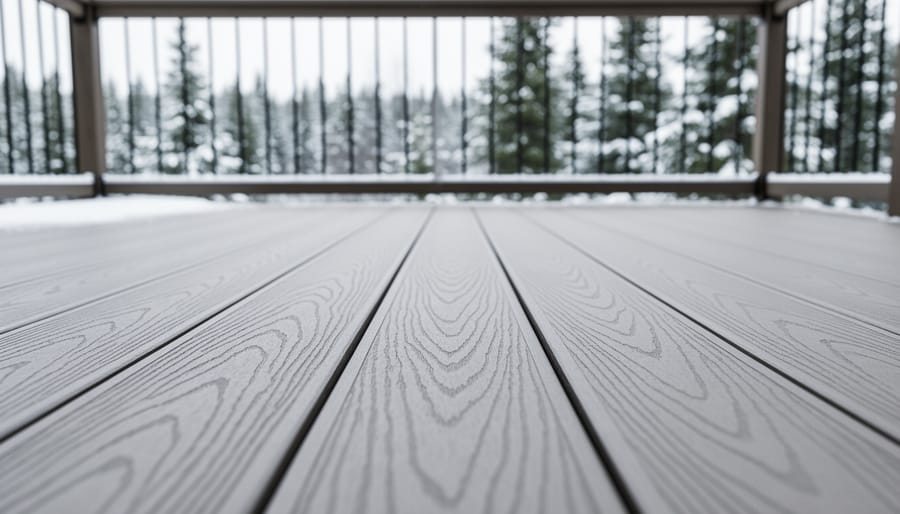
Composite deck building materials combine wood fibers and recycled plastics into engineered boards that resist rot, splintering, and insect damage while requiring minimal upkeep compared to traditional lumber. For Canadian homeowners planning outdoor renovations this year, understanding these modern alternatives has become essential as material costs fluctuate and climate considerations shape long-term durability expectations.
The decision between composite and natural wood decking affects both immediate project budgets and decades of maintenance requirements. Composite boards typically cost $4 to $12 per square foot in 2026, roughly double the price of pressure-treated lumber, yet eliminate annual staining, sealing, and board replacement that wood demands. This upfront investment pays dividends for homeowners who value low-maintenance outdoor spaces, particularly in regions experiencing harsh winters or intense UV exposure during summer months.
Performance varies significantly across composite brands and formulations. Capped composite products feature protective polymer shells that resist fading, staining, and moisture absorption better than first-generation hollow-core options. Canadian climates present unique challenges, with freeze-thaw cycles testing material flexibility and snow loads requiring adequate structural support. Homeowners in coastal British Columbia face different moisture considerations than those in prairie provinces dealing with extreme temperature swings.
Installation complexity, warranty coverage, colour retention, and actual versus claimed maintenance needs deserve careful evaluation before committing to any deck material. This guide examines composite options through the lens of real-world Canadian applications, helping homeowners make informed choices that balance aesthetics, durability, and value for their specific circumstances.
What Makes Composite Deck Building Materials Different
Composite deck building materials combine wood fibers with plastic polymers, typically recycled polyethylene or polypropylene, to create boards that mimic wood’s appearance while eliminating many of its drawbacks. The manufacturing process fuses these components under heat and pressure, producing planks with consistent density and color throughout. Unlike solid wood that varies from board to board, composite materials deliver predictable performance because every piece comes from a controlled industrial process.
Traditional wood decking, while initially less expensive, requires annual sealing, staining, and constant vigilance against rot and insect damage. Pressure-treated lumber fights decay through chemical treatment, but still splits, warps, and degrades over time. Cedar and other premium woods offer natural resistance but command high prices and still demand regular maintenance. Composite materials sidestep these limitations entirely: they won’t splinter, crack, or require refinishing, which explains their growing appeal among Canadian homeowners who’d rather spend summer weekends enjoying their deck instead of maintaining it.
- Wood-Plastic Composite (WPC)
- A blend of wood fibers and recycled plastics that forms the core of most composite deck boards. This mixture provides structural strength while resisting moisture absorption.
- Capped Composite
- Composite boards with a protective polymer shell surrounding the wood-plastic core. The cap layer shields against staining, fading, and moisture intrusion far better than uncapped versions.
- Co-Extrusion
- The manufacturing process that bonds the protective cap to the composite core in a single step. This technique creates a permanent seal that won’t delaminate or peel over time.
By 2026, Canadian homeowners have recognized that composite deck building materials address specific climate challenges our country presents. The freeze-thaw cycles that destroy wood decks leave composite largely unaffected. Summer UV exposure that bleaches and degrades traditional lumber barely touches quality capped composites. With renovation budgets stretched and labor costs rising, materials that install once and perform for decades make straightforward economic sense, even before factoring in the time saved on maintenance.
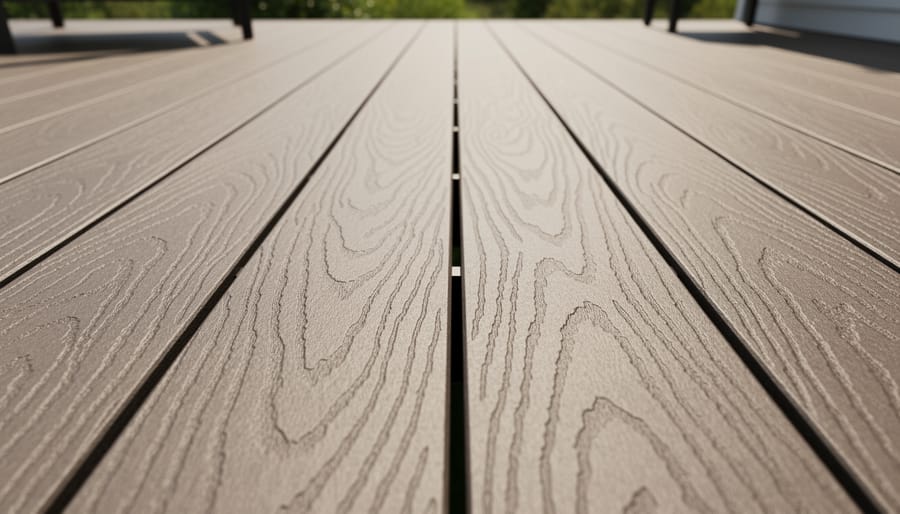
Performance in Canadian Climate Conditions
Moisture Resistance and Rot Prevention
Traditional wood decking absorbs water through its grain and pores, creating ideal conditions for rot, mold, and structural weakening. Composite deck building materials solve this problem through their plastic polymer core, which creates a moisture barrier that wood simply cannot match.
Most quality composite boards absorb less than 1% of their weight in water, even during prolonged exposure to rain and snow. This barrier prevents the freeze-thaw damage that plagues wood decks across Canadian winters, where trapped moisture expands as it freezes and breaks down material integrity season after season.
The plastic content in composite materials denies mold and mildew the organic food source they need to establish colonies. While wood decks typically show black staining and soft spots within three to five years in humid areas, composite surfaces remain structurally sound without the need for annual treatments or chemical preservatives.
Capped composite options add an extra protective shell that further blocks moisture penetration at the surface level. This means standing water from melting snow or summer storms evaporates without soaking into the board structure, eliminating the rot cycle that shortens the lifespan of traditional deck building materials throughout Ontario, Quebec, and the Atlantic provinces.
Temperature Tolerance and Expansion
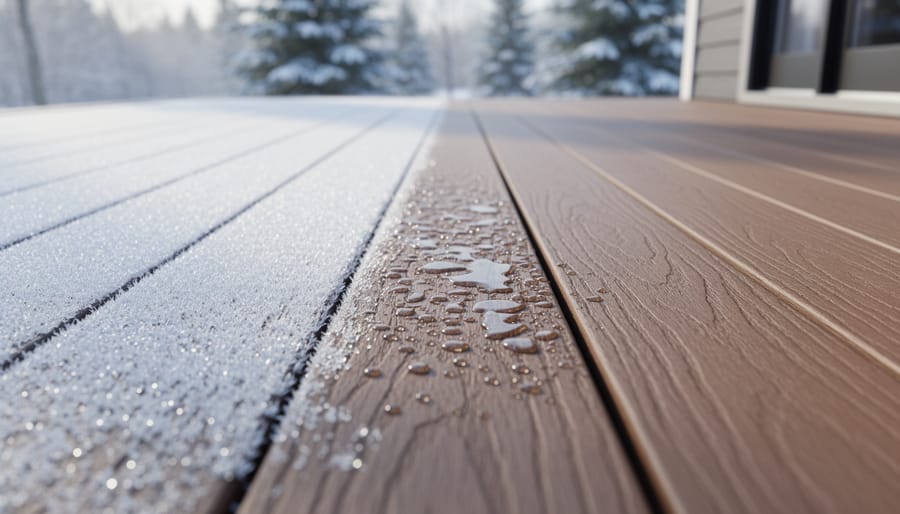
Composite deck building materials expand and contract with temperature changes, and Canadian weather puts this property to the test. A typical composite board can move up to 6mm per 3-metre length when temperature swings from -30°C in winter to 35°C in summer. This is roughly twice the movement of pressure-treated wood, making proper installation spacing non-negotiable.
When installing composite decking, leave a minimum 5mm gap between board ends and 8mm spacing from any fixed structure like house walls or posts. These gaps accommodate expansion without boards buckling or warping. Dark-colored composite deck building materials absorb more heat and expand more than lighter shades, sometimes requiring an additional 2-3mm of spacing.
Fastener systems must allow lateral movement. Hidden fastening clips work better than face screws because they let boards shift slightly while staying secure. Never install composite materials in temperatures below 4°C, when boards are contracted to their smallest size. Installing during moderate weather (15-20°C) gives you the median board length, minimizing both expansion and contraction gaps.
Framing matters too. Your substructure needs adequate ventilation underneath to prevent heat buildup, which amplifies expansion. Space joists at 400mm centers maximum for most composite materials to prevent sagging during hot weather when boards are at their most flexible.
Types of Composite Deck Building Materials for 2026
The Canadian composite decking market in 2026 offers three primary categories, each engineered for different performance needs and budgets. Understanding these distinctions helps you select materials that will perform as long as your roof lifespan and complement other property improvements like eavestrough replacement.
Uncapped composites represent the entry-level option. These boards consist of wood fiber and plastic polymers blended throughout, with no protective shell. The exposed composite core makes direct contact with moisture, UV rays, and debris. While they cost 30-40% less than capped alternatives, uncapped boards absorb more water, fade faster, and show staining from leaves or pollen. They work adequately for covered porches or shaded areas with minimal weather exposure, but struggle in full-sun installations across most Canadian climates.
Capped composites add a protective polymer shell around the wood-plastic core. This cap layer, typically 1-3mm thick, blocks moisture penetration and resists UV degradation far better than uncapped boards. Most manufacturers now offer multi-layer cap systems with distinct layers for color stability, scratch resistance, and moisture protection. These materials handle Canadian freeze-thaw cycles effectively and maintain appearance for 15-25 years with minimal intervention. Capped composites dominate the Canadian market because they balance performance and cost for typical residential installations.
PVC decking eliminates wood fibers entirely, using 100% plastic polymers throughout the board. This construction delivers maximum moisture resistance and the lightest weight, making PVC ideal for rooftop decks, pool surrounds, or properties in coastal regions with high humidity. PVC boards resist staining and mold growth better than any composite alternative, but they expand and contract more with temperature changes, requiring careful installation planning. They command premium pricing, typically 50-70% above uncapped options.
| Type | Durability | Maintenance | Price Range | Best Application |
|---|---|---|---|---|
| Uncapped Composite | Moderate | Medium-High | $8-12/sq ft | Covered or shaded areas |
| Capped Composite | High | Low | $12-18/sq ft | Full-sun residential decks |
| PVC Decking | Very High | Very Low | $15-22/sq ft | Pool decks, rooftops, high-moisture areas |
Within each category, manufacturers offer varying warranty terms, color selections, and texture profiles. Capped composites now come in wood-grain patterns so realistic they fool most observers from three feet away. The choice depends on your specific exposure conditions, aesthetic preferences, and how the deck integrates with your overall property improvement strategy.
Cost Considerations Beyond Initial Investment
Composite deck building materials typically cost $35 to $65 per square foot installed in 2026, compared to $15 to $35 for pressure-treated wood. That price gap stops many homeowners at first glance, but the calculation changes dramatically when you factor in what happens over the next 15 years.
A standard 300-square-foot composite deck runs $10,500 to $19,500 installed. The same deck in pressure-treated pine costs $4,500 to $10,500. However, that wood deck requires annual cleaning, staining every two to three years at $600 to $1,200 per treatment, and board replacement starting around year seven. Over 15 years, maintenance and repairs on wood decking add $4,500 to $8,000 to your total investment. Composite requires occasional washing with soap and water, nothing more.
Replacement frequency matters even more. Quality composite decking lasts 25 to 30 years with minimal performance degradation. Wood decks typically need major board replacement or complete rebuilds at the 15-year mark, especially in Canadian climates where freeze-thaw cycles accelerate deterioration. You’re essentially buying two wood decks in the time one composite deck serves you.
The exterior renovation value of composite decking shows up clearly in resale scenarios. Real estate appraisers recognize composite as a premium feature requiring zero immediate maintenance from buyers. Wood decks often become negotiation points, with buyers requesting credits for refinishing or replacement. A well-maintained composite deck can increase market value by 65 to 75 percent of the installation cost, compared to 50 to 60 percent recovery on wood.
Insurance considerations play a role too. Some insurers offer modest discounts for fire-resistant composite materials, and claims for deck damage get processed faster when materials have clear warranty coverage and defined lifespans. When planning your renovation budget, treat composite as a 25-year investment rather than a construction expense.
Installation Requirements and Compatibility
Installing composite deck building materials requires specific techniques that differ from traditional wood decking, and understanding these requirements prevents costly mistakes that compromise structural integrity and warranty coverage.
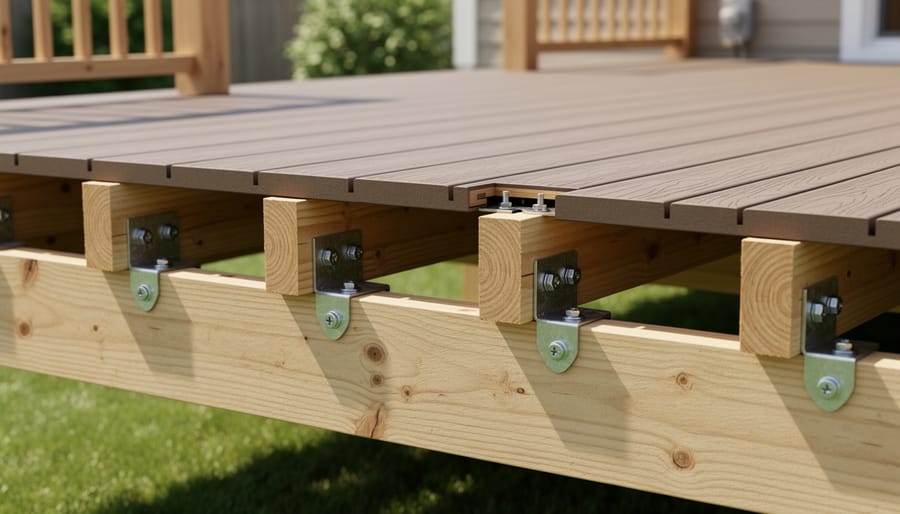
The substructure demands closer attention with composite materials. Most manufacturers require joists spaced at 16 inches on center maximum, compared to the 24-inch spacing sometimes acceptable for wood. This tighter spacing prevents sagging and supports the material’s unique flexural properties. Your framing lumber must be pressure-treated or naturally rot-resistant, with adequate blocking at board ends and rim joists properly secured. Many Canadian homeowners overlook the critical role proper flashing plays in deck longevity, similar attention to detail matters here as it does with elements like chimney flashing on roof installations.
Fastener systems represent another key distinction. While you can use traditional screws with composite deck building materials, hidden fastening systems deliver superior aesthetics and reduce surface penetrations that allow moisture infiltration. Stainless steel or coated fasteners prevent corrosion and material staining. Never use galvanized or untreated fasteners, which cause discoloration and void warranties.
Ventilation requirements often surprise first-time composite installers. Composite materials need airflow beneath and around the deck to prevent moisture accumulation and heat buildup. Leave gaps at board ends, maintain proper ground clearance (typically 12 inches minimum), and avoid completely enclosed skirting without ventilation panels.
Professional installation becomes particularly valuable when dealing with complex layouts, stairs, or multi-level designs. While straightforward rectangular decks suit experienced DIYers, intricate patterns, angled cuts, and structural transitions benefit from expertise that ensures proper material handling, expansion gap spacing, and code compliance. Canadian Roofs & Co.’s construction project guidance helps homeowners determine when professional installation protects both investment and safety, particularly for projects requiring permits or involving structural modifications to existing properties.
Maintenance and Long-Term Care
One of the most compelling advantages of composite deck building materials is their minimal upkeep compared to wood alternatives. Unlike traditional lumber that demands annual staining, sealing, and constant inspection for rot or splinters, composite decking primarily needs occasional cleaning to maintain its appearance and performance through Canadian winters and summers.
For routine care, sweep away debris weekly during leaf-fall seasons and rinse the surface with a garden hose monthly. This prevents organic material from settling into the grain pattern, which can encourage mildew growth in shaded areas. When deeper cleaning is necessary, use a mild soap solution and a soft-bristle brush, scrubbing along the grain direction. Avoid pressure washers set above 1,500 PSI, as excessive force can damage the protective cap layer on higher-end composite materials.
Stains from grease, wine, or berries typically lift with a composite deck cleaner formulated for synthetic materials. Apply the solution, let it sit for ten minutes, then scrub and rinse thoroughly. For stubborn marks, a paste of baking soda and water works without harsh chemicals. Address scratches by lightly sanding the affected spot with fine-grit sandpaper, though capped composite deck building materials resist surface damage better than uncapped versions.
A simple seasonal checklist keeps your deck performing optimally year-round:
- Spring: Inspect for winter damage, clear drainage gaps between boards, and deep-clean the entire surface after snowmelt.
- Summer: Check fasteners for any loosening due to expansion, spot-clean spills immediately, and trim back vegetation touching deck edges.
- Fall: Remove leaf accumulation daily if possible, inspect for mold in shaded corners, and clear debris from joists and substructure.
- Winter: Shovel snow promptly using plastic tools rather than metal, apply ice melt products labeled safe for composite materials, and avoid stacking firewood directly on deck boards.
This straightforward care routine preserves the appearance and structural integrity of composite deck building materials for decades, making them a practical choice for Canadian homeowners seeking long-term value without the ongoing effort traditional wood demands.
Environmental Impact and Sustainability
Modern composite deck building materials typically contain 50 to 95 percent recycled content, combining reclaimed wood fibers from sawmill waste with recycled plastics from packaging, bags, and film. This diverts thousands of pounds of material from Canadian landfills per average residential deck. Look for products certified by third-party organizations like the Forest Stewardship Council or carrying GREENGUARD certification for low chemical emissions.
The environmental trade-off isn’t entirely straightforward. While composite manufacturing requires more energy upfront than milling lumber, the extended 25- to 30-year lifespan and elimination of chemical treatments offsets this initial impact. You’re not applying stains, sealers, or preservatives that leach into soil and groundwater every few years, a significant consideration for properties near lakes or rivers common across Canadian regions.
In 2026, Canadian homeowners increasingly prioritize materials that reduce long-term environmental footprint alongside maintenance burdens. Composite deck building materials align with this shift, particularly when sourced from manufacturers with take-back programs or local production facilities that minimize transportation emissions. The sustainability case strengthens when you factor in eliminating repeated wood replacement cycles and the associated waste, making composite a practical choice for environmentally conscious property improvements.
Making the Right Choice for Your Property
Composite deck building materials deliver exceptional value when your priorities include durability, minimal upkeep, and long-term performance in Canadian weather. If your property experiences harsh winters, significant moisture exposure, or you prefer spending weekends enjoying your deck rather than maintaining it, composite typically justifies the higher upfront cost through decades of reliable service.
Traditional wood remains viable for specific situations: tight budgets, historical property aesthetics, or DIY enthusiasts who appreciate natural material workability. However, most Canadian homeowners in 2026 find that composite’s resistance to rot, insects, and weather damage eliminates the ongoing expense and effort wood demands.
Canadian Roofs & Co. works alongside property owners throughout the material selection process, bringing the same community-focused approach to deck projects that we apply to roofing and renovation work. Our team understands how different deck building materials perform across various Canadian climates and can assess your property’s specific conditions, usage patterns, and budget constraints.
Whether you’re planning a new deck construction or replacing an aging structure, making an informed choice about deck building materials protects your investment and enhances your outdoor living space for years to come. We’re here to provide the guidance and quality craftsmanship that turn your vision into reality.