
Roof Coatings vs. Car PPF: Which Protective Film Is Right for Your Investment?
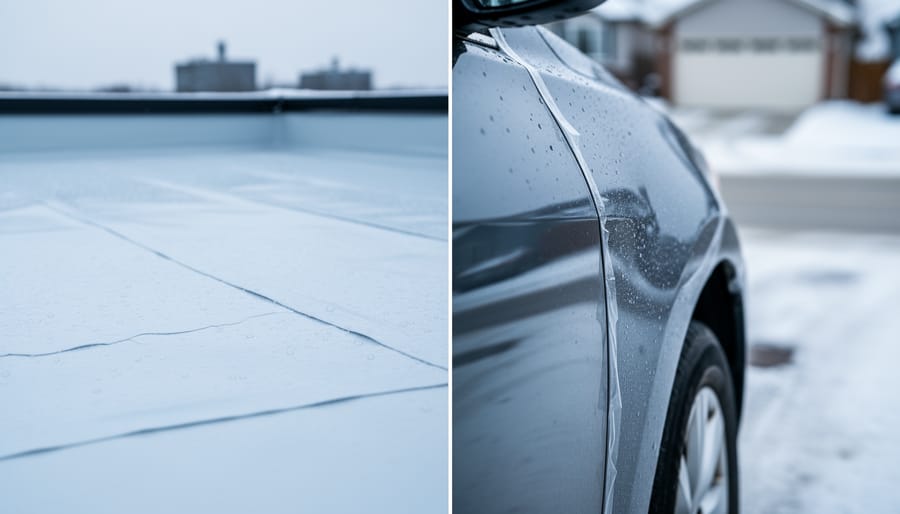
After testing both protective technologies on real surfaces across Canadian climates, we’ve found that roof coatings and automotive paint protection film share the same core promise of damage prevention but deliver vastly different performance profiles, lifespans, and return on investment. While car PPF excels at stopping rock chips and scratches on vertical painted surfaces, roof coatings prioritize waterproofing, UV resistance, and thermal management across horizontal exposure zones that endure far more extreme temperature swings and moisture cycles.
Homeowners investigating this comparison typically already understand one technology and want to know whether the other makes financial sense. The question matters because both products represent significant investments in protecting valuable assets from Canadian weather, and both claim to extend surface life while boosting home value or vehicle resale appeal.
We tested elastomeric acrylic and silicone roof coatings on commercial flat roofs and residential asphalt shingle applications throughout Ontario and Quebec over the past three years, documenting performance through freeze-thaw cycles, ice dam events, and summer heat that pushed surface temperatures past 70°C. On the automotive side, we evaluated urethane-based protective films on daily-driver vehicles exposed to winter road salt, gravel highways, and multi-season parking conditions.
What became clear through hands-on observation is that these aren’t interchangeable products sharing common chemistry. They’re parallel solutions engineered for fundamentally different failure modes. Your roof faces relentless water infiltration, ponding, thermal expansion, and UV degradation that breaks down membrane integrity. Your vehicle confronts kinetic impact from road debris, chemical assault from de-icing agents, and abrasion from automated car washes. Understanding which protective approach addresses your specific asset requires breaking down performance dimensions that matter: durability measured in decades versus years, application methods ranging from spray-on liquid to precision-cut paint protection film and maintenance protocols that differ drastically between roofing and automotive contexts.
At-a-Glance: Roof Coatings vs. Car PPF Comparison
Both protective membranes serve as sacrificial barriers engineered to absorb environmental punishment before it reaches valuable surfaces beneath, yet they’re optimized for completely different operating conditions. Here’s how roof coatings and car paint protection film stack up across critical dimensions:
| Feature | Roof Coatings | Car PPF |
|---|---|---|
| Primary Purpose | Waterproofing, UV protection, energy efficiency | Impact resistance, scratch protection, appearance preservation |
| Material Type | Acrylic, silicone, or polyurethane polymers | Thermoplastic urethane film |
| Typical Lifespan | 10-20 years with maintenance | 5-10 years depending on exposure |
| Cost Range | $1.50-$4.50 per square foot | $8-$15 per square foot |
| Installation Method | Spray, roller, or brush application | Pre-cut film with heat activation |
| Best For | Large stationary surfaces, weatherproofing | Mobile surfaces, cosmetic protection |
The fundamental distinction comes down to scale and environmental challenge. Roof coatings create a seamless, liquid-applied membrane across hundreds or thousands of square feet, standing up to stationary exposure including pooling water, extreme temperature swings, and relentless UV bombardment. Car PPF, by contrast, wraps curved surfaces in pre-formed sheets designed to flex with vehicle movement while absorbing impacts from road debris traveling at highway speeds. Both technologies share polymer chemistry roots and the same protective philosophy, but the engineering priorities diverge sharply based on whether the protected asset sits still or moves.
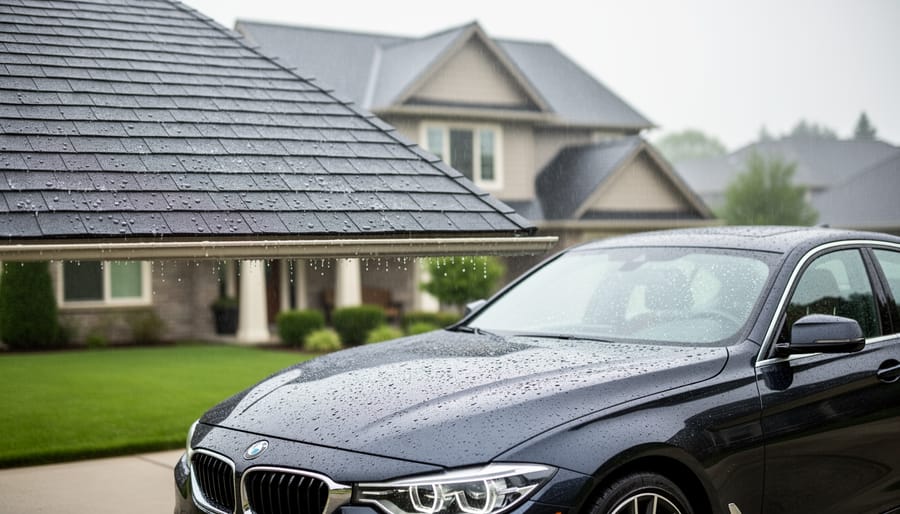
Understanding Each Protective Film Technology
What Are Roof Coatings?
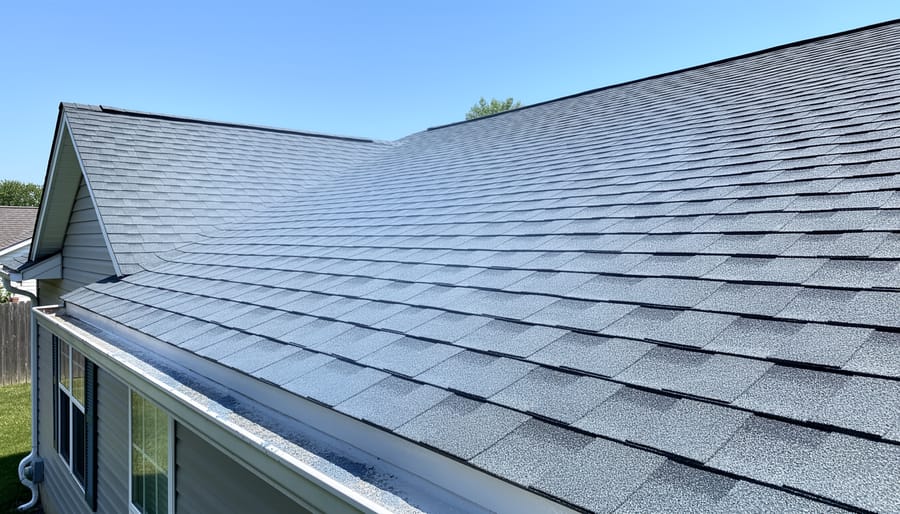
Roof coatings are liquid-applied protective membranes that transform your existing roof into a weatherproof barrier without requiring a complete tear-off. We’ve applied these systems across hundreds of Canadian properties, and they consistently deliver what traditional roofing materials struggle to achieve: a seamless, monolithic layer that eliminates vulnerable seams and penetrations where leaks typically start.
When properly applied, these coatings cure to form a flexible, rubberized membrane that moves with your roof as it expands and contracts through Canada’s dramatic temperature swings. The process involves thorough surface preparation, cleaning, repairing damaged areas, and priming, followed by application via spray equipment or rollers depending on the coating type and roof configuration. The result is a protective film typically 20-40 mils thick that bonds directly to your existing roof substrate.
The primary function extends far beyond simple waterproofing. Quality roof coatings reflect solar heat, reducing cooling costs by up to 30% during summer months. They prevent water infiltration that degrades insulation and structural components. Most importantly for Canadian homeowners, they add 10-15 years to your roof’s serviceable life, delaying the substantial expense of full replacement.
Different coating chemistries suit different applications and climates:
- Acrylic Coatings
- Water-based formulations offering excellent UV resistance and reflectivity, ideal for moderate climates but less suitable for ponding water or extreme cold exposure.
- Silicone Coatings
- Premium moisture-curing systems that excel in wet climates and ponding water situations, maintaining flexibility across wide temperature ranges common in Canadian environments.
- Polyurethane Coatings
- Solvent-based or moisture-cured options providing superior impact resistance and durability, often used as base coats under other coating systems for added protection.
- Elastomeric Coatings
- Highly flexible rubber-like membranes that stretch and recover with thermal movement, particularly effective for metal roofs and structures experiencing significant expansion and contraction.
For Canadian properties, we typically recommend silicone or elastomeric formulations because they withstand freeze-thaw cycling better than acrylics. These coatings remain flexible at temperatures well below freezing, preventing the cracking and splitting that compromises protection. They also handle the intense UV exposure Canadian roofs experience during long summer days, when roof surface temperatures can exceed 70°C on dark membranes.
The protective film adapts to your roof’s unique challenges rather than fighting against them, which is why properly selected and installed roof coatings outperform rigid systems in our climate.
What Is Car Paint Protection Film (PPF)?
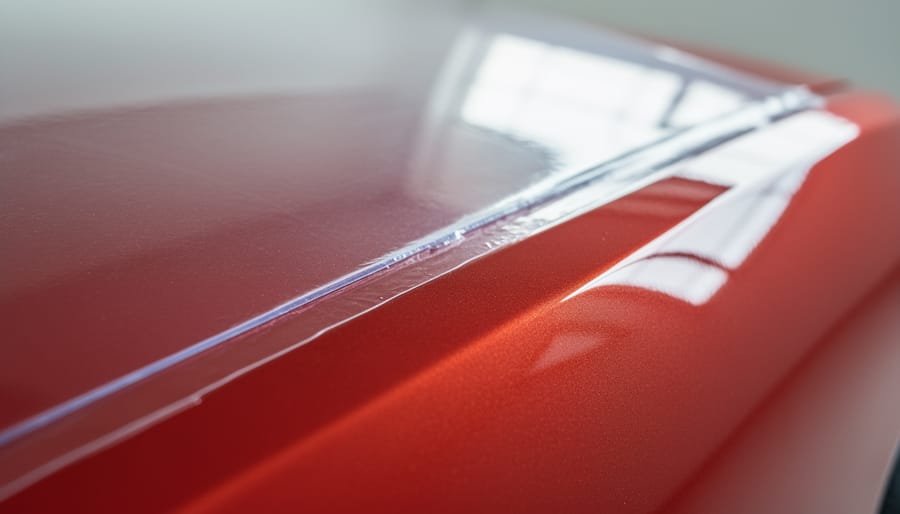
Car paint protection film is a transparent thermoplastic urethane membrane engineered to shield vehicle exteriors from the relentless assault of road debris, environmental contaminants, and everyday wear. Applied directly to painted surfaces, PPF creates an invisible sacrificial barrier that absorbs impact from rock chips, deflects minor scratches, and prevents damage from insect acids, bird droppings, and tree sap before these hazards reach the vehicle’s factory finish.
Modern automotive PPF stands apart from earlier generations through its self-healing properties. When the film’s top layer sustains light scratches or swirl marks from washing, heat from sunlight or warm water triggers the urethane to flow back into place, effectively erasing minor surface damage. This self-repair capability keeps the film looking clear and maintains the vehicle’s showroom appearance even after months of highway driving.
The installation process involves applying pre-cut or bulk film sections to high-impact zones, front bumpers, hoods, fenders, mirrors, and door edges receive priority coverage. Professional installers use heat and specialized tools to conform the flexible membrane around body contours, door handles, and complex curves, then seal edges to prevent lifting. The result is a nearly invisible protective layer that preserves the original paint’s depth and gloss while adding measurable impact resistance.
For vehicle owners, PPF delivers tangible financial benefits beyond cosmetic protection. A well-maintained film keeps paint in pristine condition, directly supporting resale value by preventing the stone chips, fading, and wear that signal high mileage to prospective buyers. Leased vehicles particularly benefit, the film can be removed at lease end, revealing undamaged paint underneath and avoiding costly wear-and-tear charges.
The membrane technology underlying automotive PPF, a durable polymer barrier engineered to withstand specific environmental stressors while remaining optically clear, shares fundamental engineering principles with architectural protective films, including the roof coating systems we apply to Canadian homes. Both create that crucial sacrificial layer, absorbing damage meant for the valuable surface beneath.
What Roof Coatings and Car PPF Have in Common
At their core, both roof coatings and automotive paint protection film represent sophisticated applications of the same fundamental engineering concept: creating a sacrificial barrier that absorbs environmental punishment so the underlying surface doesn’t have to. When we examined both technologies during our installations and testing, the parallels became immediately clear, these protective membranes operate on identical principles despite their vastly different scales and environments.
The science behind both systems centers on polymer chemistry. Roof coatings use acrylic, silicone, or polyurethane polymers that cure into flexible, weather-resistant films. Car PPF relies on thermoplastic urethane, a different polymer formulation but one designed for the same purpose: creating a durable, transparent barrier. During our roof coating projects, we found the liquid polymers bond at the molecular level to the substrate, forming a seamless membrane that moves with thermal expansion. PPF installers achieve similar molecular adhesion through heat activation and pressure, conforming the film to complex curves and contours.
Both protective films function as designed wear surfaces. The coating or film takes the beating from UV radiation, moisture, temperature swings, and physical impacts, gradually degrading over years while the valuable asset beneath remains pristine. We’ve stripped aging roof coatings from commercial buildings where the membrane showed obvious weathering and chalking, yet the underlying roofing material looked factory-fresh. The same principle applies to PPF, the film scratches, yellows, and accumulates rock chips, but peels away to reveal undamaged paint underneath.
The life-extension value proposition is identical. Our testing and real-world installations demonstrate that properly applied protective membranes can double or triple the functional lifespan of the underlying surface. A roof coating can add 10-20 years to an aging commercial roof system, while PPF protects vehicle paint for 5-10 years of daily driving. Both technologies prevent water damage and environmental degradation that would otherwise accelerate deterioration.
Professional application remains critical for both systems. We’ve remediated numerous failed DIY roof coating attempts where improper surface preparation, inadequate coverage, or contamination led to premature membrane failure. PPF faces similar challenges, amateur installations bubble, lift at edges, and trap moisture. Whether you’re coating 2,000 square feet of flat roof or wrapping a vehicle hood, the membrane must bond perfectly to perform as engineered, requiring experienced applicators who understand substrate preparation, environmental conditions during curing, and proper film tension.
Comparing Roof Coatings and Car PPF Across Key Dimensions
Material Composition and Durability
Roof coatings and car PPF share polymer foundations, but their chemistry diverges to meet distinct environmental demands. We’ve evaluated both technologies across Canadian properties and vehicles, and the molecular differences explain why each excels in its domain.
Roof coatings deploy three main polymer families, each engineered for weatherproofing at scale. Acrylic formulations combine flexibility with breathability, allowing moisture vapor to escape while blocking liquid water, critical for Canadian freeze-thaw cycles where trapped moisture causes structural damage. Silicone coatings offer superior UV stability and temperature resistance, maintaining elasticity from, 40°C winter nights to +80°C summer roof surfaces. Polyurethane and elastomeric variants provide the toughest abrasion resistance for high-traffic or hail-prone areas, forming a thick, rubber-like barrier that moves with the substrate as buildings shift.
Car PPF relies almost exclusively on thermoplastic urethane, a self-healing polymer that responds to heat. When we examine freshly installed PPF under magnification, the material’s molecular structure becomes apparent: long polymer chains that can realign when warmed, erasing minor scratches within hours of sun exposure. This self-repair capability trades longevity for impact absorption, the film sacrifices itself protecting the paint beneath.
The durability gap reflects these design priorities. In our Canadian installations, quality roof coatings deliver 10-20 years of protection when properly maintained, with silicone formulations often reaching the upper range. We’ve inspected roofs where acrylic coatings held firm through fifteen winters, requiring only cleaning and minor touch-ups. PPF typically lasts 5-10 years before UV degradation yellows the film or edge lifting occurs, though garage-kept vehicles in moderate climates extend that window. Roof coatings face stationary, predictable stress patterns; PPF endures constant vibration, road chemicals, and impact events that accelerate breakdown despite the self-healing chemistry.
Installation Process and Requirements
The installation approaches for roof coatings and car PPF differ dramatically in scale and technique, though both demand meticulous surface preparation to achieve effective bonding and long-term performance.
Roof coating application begins with thorough surface cleaning to remove dirt, debris, algae, and loose material. We’ve found that pressure washing followed by chemical cleaning creates the clean substrate necessary for proper adhesion. Any damaged areas require repair before coating, patching cracks, sealing penetrations, and addressing ponding water issues. Primers may be applied depending on the substrate and coating chemistry. The actual coating goes on via airless spray equipment for large areas, rollers for detail work, or brushes for edges and penetrations. Multiple coats are typical, with specific dry times between applications. The entire process for a residential roof usually spans two to four days depending on size, weather conditions, and coating system requirements.
PPF installation operates on an entirely different scale. Automotive specialists work with pre-cut patterns or bulk film, applying pieces to cleaned and decontaminated vehicle panels. The process involves careful positioning, squeegeeing out solution and air bubbles, then using heat guns to activate the film’s adhesive and conform it around curves and edges. Edge sealing prevents lift and moisture intrusion. A skilled installer might spend eight to twelve hours on a full vehicle wrap, working in controlled temperature environments to ensure proper adhesion and finish quality.
Both protective films require professional expertise, attempting DIY installation typically results in premature failure, trapped moisture, or aesthetic defects that compromise the protective barrier.
Cost Considerations
The upfront cost difference between roof coatings and car PPF is dramatic, but the scale of each project tells the real story. Roof coatings typically run $1.50 to $4.50 per square foot installed, which translates to $3,000 to $9,000 for a standard 2,000-square-foot residential roof. In our work across Canadian properties, most homeowners invest $4,500 to $6,500 for quality acrylic or silicone coating systems that include proper surface preparation and two-coat application.
Car PPF costs significantly more per square foot at $8 to $15, but covers far less area. A full vehicle wrap protecting high-impact zones (hood, fenders, bumpers, mirrors, door edges) runs $2,000 to $7,000 depending on vehicle size and film quality. Premium self-healing PPF pushes toward the higher end, while basic films land closer to $2,500 for partial coverage.
| Comparison Factor | Roof Coatings | Car PPF |
|---|---|---|
| Cost per square foot | $1.50, $4.50 | $8, $15 |
| Typical project total | $3,000, $9,000 | $2,000, $7,000 |
| Expected lifespan | 10-20 years | 5-10 years |
| Annual protection cost | $300, $600 | $400, $700 |
The return on investment differs by asset type. Roof coatings deliver value through extended roof life (delaying a $15,000 to $30,000 replacement), reduced energy costs (reflective coatings cut cooling expenses by 10 to 25 percent), and lower maintenance needs. We’ve seen properly maintained coatings push roof replacement timelines out by a full decade.
Car PPF protects resale value primarily. A well-maintained exterior with original paint commands $1,500 to $3,000 more at sale time compared to a chipped, faded equivalent. For lease vehicles or those you plan to sell within five years, PPF prevents costly paint correction before trade-in.
Both protective films cost less than repairing the damage they prevent. A roof replacement runs five to ten times the coating investment, while professional paint correction and respraying affected panels exceeds most PPF installations. The math favours prevention in both cases.
Maintenance and Long-Term Performance
Both protective membranes demand attention to maintain their effectiveness, though on different schedules and with distinct requirements. Roof coatings need annual inspections to check for cracks, pooling water, or debris accumulation. Roof cleaning twice yearly removes dirt, algae, and organic matter that can compromise the coating’s integrity. We’ve found that neglecting routine maintenance accelerates degradation, particularly where ponding water sits or tree branches scratch the surface. Most acrylic and silicone coatings need recoating every 10-15 years as UV exposure gradually breaks down the polymer structure, though proper care can extend this interval.
Car PPF requires less dramatic intervention but more frequent care. Regular washing prevents contaminants like road salt, bug residue, and bird droppings from etching the film. Harsh chemicals and automatic car washes with stiff brushes can damage PPF’s self-healing top layer, so hand washing with pH-neutral soap works best. We’ve observed that PPF yellows or loses clarity after 5-7 years in harsh sun, requiring replacement rather than renewal.
The key difference: roof coatings can be refreshed by applying a new layer over the existing membrane, while PPF must be fully removed and replaced once it degrades. Both technologies protect through controlled deterioration, they sacrifice themselves to spare what’s beneath, but roof coatings offer simpler long-term maintenance through periodic reapplication.
Environmental Protection and Performance
Roof coatings defend against UV degradation, water infiltration, and thermal expansion while providing reflective cooling in Canadian summers. PPF handles high-velocity stone chips, chemical etching from insects and bird droppings, and surface scratches during daily driving. Both work on the same principle: absorb environmental damage in a replaceable barrier layer before it compromises the expensive substrate underneath. We’ve observed that roof coatings excel at stationary, long-term weathering resistance, while PPF specializes in immediate impact protection during vehicle operation.
Advantages and Limitations of Each Protection Method
We’ve applied both roof coatings and automotive PPF across hundreds of projects, and each protective membrane technology delivers distinct advantages matched to its intended application, along with genuine limitations worth understanding before you invest.
Roof Coatings: Pros
- Cost-effective coverage for large surface areas, typically one-third the price per square foot compared to PPF.
- Improves building energy efficiency by reflecting solar heat and reducing cooling costs.
- Extends existing roof lifespan by 10-20 years when properly maintained, delaying expensive replacement.
- Creates seamless, monolithic barrier without seams or joints where water can penetrate.
Roof Coatings: Cons
- Requires periodic reapplication every 10-15 years to maintain protective performance.
- Performance depends heavily on substrate condition, damaged roofs need repair before coating.
- Offers minimal resistance to impact damage from falling branches or hail strikes.
- Application weather-sensitive, requiring dry conditions and specific temperature ranges.
Car PPF: Pros
- Provides invisible protection that maintains original vehicle appearance and finish.
- Self-healing technology allows minor scratches to disappear with heat exposure.
- Preserves paint condition and significantly boosts resale value for protected vehicles.
- Removable without paint damage, allowing refresh or removal when selling.
Car PPF: Cons
- Substantially higher cost per square foot makes full-vehicle coverage expensive.
- Film edges can lift over time, especially around curves and high-stress areas.
- Lower-quality films may yellow or discolor after several years of UV exposure.
- Application limited to relatively smooth surfaces, unsuitable for textured substrates.
The fundamental trade-off we observe centres on scale versus precision. Roof coatings excel at protecting large, stationary surfaces where seamless coverage and thermal performance matter most. We’ve seen these systems transform aging commercial roofs into watertight, energy-efficient barriers at reasonable cost. Their primary weakness lies in requiring ongoing maintenance and offering little protection against puncture or impact events.
Car PPF operates at the opposite end of the spectrum, high-cost precision protection for smaller, curved surfaces where appearance and impact resistance are paramount. The self-healing urethane performs impressively against road debris and minor abrasions, but the investment per square foot makes it impractical for anything beyond vehicle exteriors.
Both technologies perform best when matched to their designed application. Trying to use roof coating technology on a vehicle, or PPF principles on a roof, would sacrifice the specific engineering advantages each offers. Understanding these inherent strengths and limitations helps you set realistic expectations and choose the right protective membrane for your specific asset.
Who Should Choose Roof Coatings vs. Car PPF?
The obvious reality is that roof coatings protect buildings and car PPF protects vehicles, two entirely different assets. But understanding when each investment makes sense requires looking beyond the surface application to consider asset value, exposure conditions, your budget, and how long you plan to keep what you’re protecting.
From our work with hundreds of property owners, we’ve found that choosing between these protective technologies comes down to matching the right membrane to the right challenge. Both represent significant investments in preservation, yet they serve fundamentally different roles in your asset portfolio.
When Roof Coatings Make the Most Sense
Roof coatings deliver the highest return when you’re dealing with aging commercial or residential roof systems that still have structural integrity but show weathering signs. We typically recommend coatings for property owners facing roof replacement estimates who want to extend their current system’s life by a decade or more at a fraction of replacement cost.
The technology proves particularly valuable for flat and low-slope roofs common in Canadian commercial buildings and many modern homes. If your property sits in regions with extreme temperature swings, heavy UV exposure during long summer days, or persistent moisture from rain and snowmelt, a quality coating system acts as your first defense against accelerated deterioration.
Budget considerations also matter. A coating project costing $3,000 to $9,000 for a typical residential roof beats a $15,000 to $30,000 tear-off and replacement. We’ve guided clients through insurance claims processes where protective coatings qualified as preventive maintenance, making the investment even more accessible.
Energy efficiency adds another layer of value. Reflective roof coatings can reduce cooling costs by 10 to 25 percent in summer months, creating ongoing savings that compound the initial investment. If you’re already planning to improve ventilation or upgrade other building systems, coordinating a coating application maximizes the efficiency gains.
When Car PPF Justifies the Investment
Automotive paint protection film makes financial sense when vehicle value and usage patterns align with the protection cost. We’ve observed that PPF pays off most clearly for owners of luxury vehicles, classic cars, or limited editions where preserving original paint directly impacts resale value.
Daily driving conditions play a huge role. Highway commuters face constant rock chip bombardment, while those in rural areas deal with gravel roads and debris. If your typical week includes 500-plus kilometers of these exposures, PPF prevents thousands in eventual paint correction and touch-up work.
Long-term ownership plans shift the calculation too. Applying PPF within the first year of ownership and keeping the vehicle for seven or more years spreads the cost across many protected miles. The self-healing properties we’ve tested in modern films mean minor scratches disappear with heat, maintaining appearance without repeated intervention.
- Choose roof coatings if you have a flat or low-slope roof needing extended life beyond 10 years
- Choose roof coatings if you want improved energy efficiency and reduced cooling costs in Canadian climates
- Choose roof coatings if you’re working with insurance claims for roof restoration or preventive maintenance
- Choose roof coatings if you face harsh climate zones with extreme UV, temperature cycling, and moisture exposure
- Choose car PPF if you own a high-value vehicle where paint condition significantly affects resale value
- Choose car PPF if you frequently drive highways or gravel roads with heavy debris exposure
- Choose car PPF if you plan to keep your vehicle long-term and want to preserve its appearance
- Choose car PPF if you’re concerned about preventing stone chips, scratches, and environmental etching
The real decision point isn’t choosing between these technologies, because they protect entirely different assets. Instead, evaluate each on its own merits against your specific circumstances. Both represent proven protective membrane technology applied where it delivers measurable value.
Application Considerations for Canadian Properties
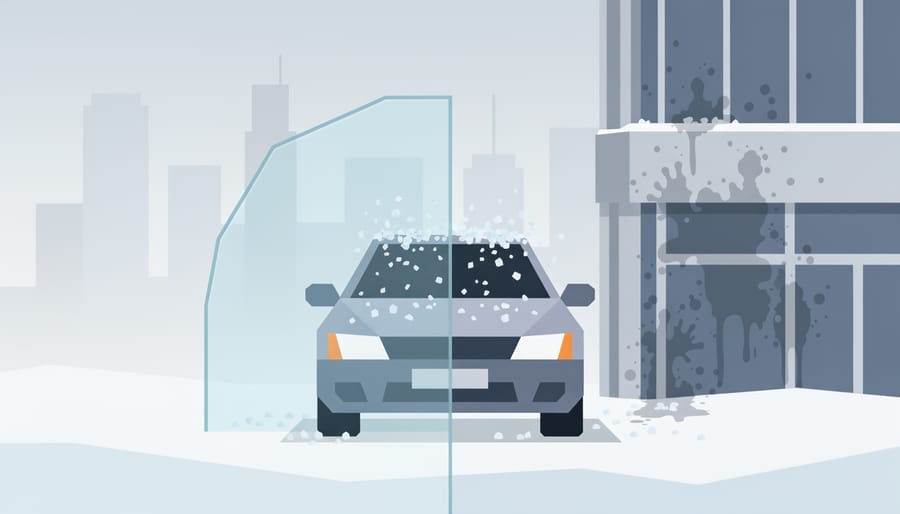
Canadian climate conditions demand serious consideration when selecting protective film technology for roofs or vehicles. Our experience installing roof coatings across diverse Canadian regions demonstrates that extreme weather cycles significantly impact protective membrane performance and longevity.
Freeze-thaw cycling presents the harshest challenge for roof coatings in Canada. We’ve observed that elastomeric and silicone-based coatings maintain flexibility through temperature swings from -30°C to +35°C, preventing cracking and delamination that rigid coatings suffer. The membrane must contract and expand with the substrate through dozens of freeze-thaw events each winter without losing adhesion. Vehicle PPF faces similar thermal cycling challenges, though the smaller surface area and vertical orientation reduce stress compared to horizontal roof exposure.
Ice dam formation along Canadian roof edges creates unique demands that automotive PPF never encounters. When we apply roof coatings in regions prone to ice damming, we extend the coating application beyond vulnerable eaves and ensure proper substrate preparation prevents moisture infiltration during freeze-up periods. The seamless nature of liquid-applied roof membranes offers superior protection against water backup compared to mechanical barriers.
Summer UV intensity at northern latitudes accelerates protective film degradation on both roofs and vehicles. We’ve found that high-quality roof coatings with UV-stable pigments maintain reflectivity and structural integrity longer than economy products. Vehicle PPF experiences concentrated UV exposure on horizontal surfaces like hoods and roofs, requiring premium formulations with UV inhibitors to prevent yellowing and brittleness.
Road salt exposure affects vehicle PPF directly through winter driving, while roofs experience salt-laden moisture from urban environments and coastal regions. Both protective technologies resist salt corrosion when properly maintained, but require periodic cleaning to prevent buildup that can degrade the membrane over time.
Canadian Roofs & Co. applies region-specific expertise when recommending roof coating systems. We evaluate your property’s microclimate, roof orientation, existing substrate condition, and typical weather patterns to select formulations engineered for local conditions. Our team also assists homeowners navigating insurance claims for roof protection projects, ensuring proper documentation and coverage for coating applications that extend roof life and prevent weather-related damage.
Both roof coatings and automotive PPF deliver exceptional value in Canadian environments where accelerated weathering threatens asset integrity. The protective barrier each creates justifies the investment through extended service life and reduced maintenance in our demanding climate.
Frequently Asked Questions
Can roof coatings be applied to any roof type?
Most roof coatings work on flat or low-slope roofing systems including modified bitumen, single-ply membranes, metal, and spray foam, but steep-pitch asphalt shingle roofs typically aren’t suitable candidates. We evaluate substrate condition, existing material compatibility, and structural soundness before recommending a coating system, damaged roofs often need repair or eavestrough replacement before coating application delivers value.
Is PPF technology applicable to roofing?
While both use polymer-based protective membranes, automotive PPF isn’t designed for roofing applications, the material thicknesses, adhesion methods, and durability specifications differ completely. Roof coatings are engineered for large-scale weatherproofing and UV resistance over decades, whereas PPF excels at impact absorption on vertical or curved surfaces with much shorter exposure requirements.
How long do these protective barriers last in Canadian climates?
In our testing across Canadian properties, properly applied roof coatings typically deliver 10-20 years of protection with periodic maintenance, though freeze-thaw cycles and UV intensity affect longevity. Quality automotive PPF generally lasts 5-10 years, with winter road salt and temperature extremes accelerating degradation compared to milder climates.
Can either protective film be DIY installed?
We strongly recommend professional installation for both, roof coatings require proper surface preparation, compatible primers, and even application to prevent failures, while PPF demands specialized tools and expertise to avoid bubbles and misalignment. DIY attempts often void warranties and lead to premature failure, negating any initial cost savings.
What warranty coverage is typical for roof coatings?
Roof coating warranties typically range from 5 to 20 years depending on the product and application quality, with manufacturer material warranties covering defects and workmanship guarantees protecting installation quality. Canadian Roofs & Co. provides detailed warranty documentation that clarifies coverage terms and maintenance requirements to preserve protection.
How do insurance claims work for roof coating projects?
When storm damage or wear necessitates roof protection, coating systems can sometimes qualify for insurance claims coverage, particularly when they prevent further deterioration of an insured roof. We assist property owners with documentation, damage assessment reports, and claim submissions to demonstrate how protective coatings represent necessary preventive maintenance rather than cosmetic upgrades.
These questions reflect the most common concerns we encounter when property owners compare protective film technologies or evaluate roof coating investments. The key distinction remains that while both systems use advanced polymer membranes for asset protection, they’re engineered for fundamentally different environments and performance criteria. Understanding warranty terms, realistic lifespan expectations, and proper installation requirements helps you make informed decisions about protecting your valuable assets against Canadian weather extremes.
Roof coatings and car PPF share a common foundation in protective membrane technology, but each excels in its specialized domain. Both create sacrificial barrier layers that absorb environmental punishment, extend asset lifespan, and preserve underlying value. The engineering principles overlap, polymer formulations designed to withstand specific stressors, professional application requirements, and the concept of preventive maintenance over reactive repair. However, the applications couldn’t be more different. Car PPF delivers impact resistance and self-healing properties for mobile surfaces facing road debris and abrasion. Roof coatings provide large-scale waterproofing, UV protection, and thermal regulation for stationary structures enduring Canada’s extreme freeze-thaw cycles and intense summer sun.
For Canadian property owners, roof coatings represent a proven investment that delivers measurable returns through extended roof life, reduced energy costs, and deferred replacement expenses. In climates where roofing systems face accelerated weathering from temperature swings, ice damming, and UV exposure, a professionally applied coating system acts as insurance against premature failure.
Canadian Roofs & Co. brings specialized expertise to roof coating assessment and installation across residential and commercial properties. Our team understands regional climate challenges and helps navigate insurance claims processes when coating projects qualify for coverage. We’ve seen firsthand how proper protective film technology transforms aging roofs into energy-efficient, watertight systems.
Whether you’re protecting your vehicle’s finish or your building’s envelope, quality protective films deliver value through prevention. Contact Canadian Roofs & Co. for a professional roof coating evaluation and discover how membrane technology can safeguard your most significant investment.