
CCS Construction Projects Coming to Canada: What Property Owners Should Actually Expect
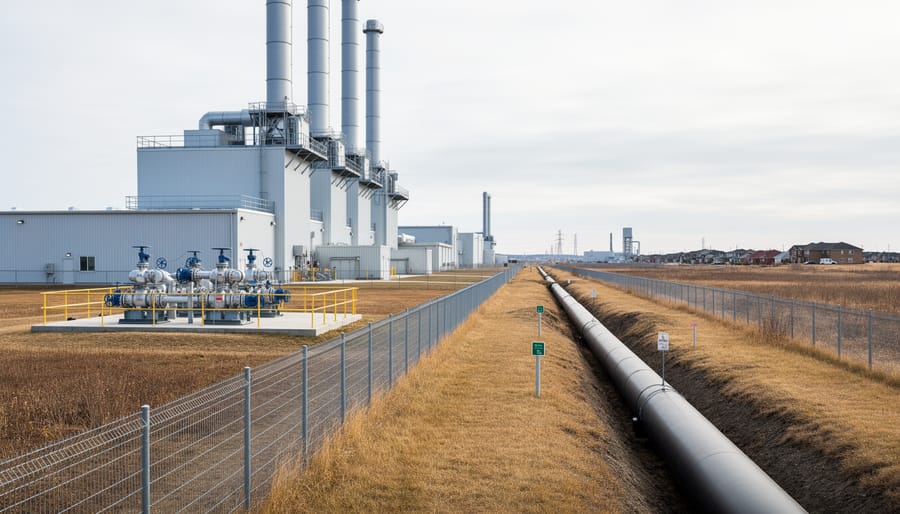
Carbon capture and storage construction is reshaping Canada’s industrial landscape in 2026, and if you’re a property owner near major energy infrastructure corridors, these massive projects could affect your land rights, property values, and local community development. CCS construction involves building large-scale facilities to capture carbon dioxide emissions from industrial sources, transport them through extensive pipeline networks, and store them permanently underground in geological formations.
The scale of these projects is unprecedented. On July 2nd, Alberta’s government, Ottawa, and five major oilsands producers signed a memorandum of understanding to advance the Pathways carbon capture project, which will link 20 different oilfield CCS sites and transport approximately 6 million tonnes of captured CO2 annually by the mid-2030s. Both levels of government are entering into equal partnership, with meaningful equity reserved for Indigenous Peoples, and consultations with Indigenous representatives began immediately following the agreement.
For property owners, understanding CCS construction matters beyond environmental policy. These industrial developments require significant land acquisition for capture facilities, extensive pipeline rights-of-way crossing private and commercial properties, and long-term monitoring infrastructure. The construction phase brings both challenges and opportunities: potential disruption to existing properties, changes to local zoning and development patterns, and questions about how property insurance valuations account for proximity to major energy infrastructure.
Canadian property and business owners need reliable information about how these projects intersect with property rights, construction impacts, and insurance considerations as CCS becomes a central feature of Canada’s energy transition strategy.
Understanding CCS Construction in Canada’s Energy Sector
CCS construction refers to the physical building of three interconnected systems that work together to reduce industrial carbon emissions. First, facilities capture carbon dioxide from industrial operations before it enters the atmosphere. Second, pipeline networks transport this captured CO2 from industrial sites to storage locations. Third, underground storage infrastructure permanently stores the carbon dioxide in deep geological formations.
Understanding the basic terminology helps property owners make sense of these projects:
- Carbon Capture
- Industrial equipment that separates CO2 from other gases at facilities like oilsands operations or power plants. The captured carbon is then compressed into a liquid state for transport.
- Transport Infrastructure
- Specialized pipelines designed to move compressed CO2 from capture facilities to storage sites. These pipelines follow similar construction methods to oil and gas pipelines but require specific materials to handle carbon dioxide safely.
- Storage Sites
- Deep underground rock formations, typically 1,000 metres or more below the surface, where captured CO2 is permanently injected and stored. These geological formations have naturally impermeable cap rocks that prevent carbon from returning to the atmosphere.
- Sequestration
- The long-term containment of carbon dioxide in underground storage. Once injected, the CO2 remains trapped in porous rock formations through a combination of physical and chemical processes.
Canada is accelerating CCS construction in 2026 because the technology offers a way to maintain resource sector employment while meeting climate commitments. The country has significant geological advantages for carbon storage, particularly in Alberta and Saskatchewan where decades of oil and gas development have created detailed underground maps. Major industrial emitters face increasing pressure to reduce their carbon footprint, and CCS provides a pathway that doesn’t require shutting down existing operations.
For property owners, CCS construction represents large-scale industrial infrastructure development similar in scope to major pipeline or utility projects. These aren’t small facilities, a single carbon capture plant can occupy several hectares, and pipeline networks may cross multiple municipalities and private lands.
Major CCS Projects Taking Shape in 2026
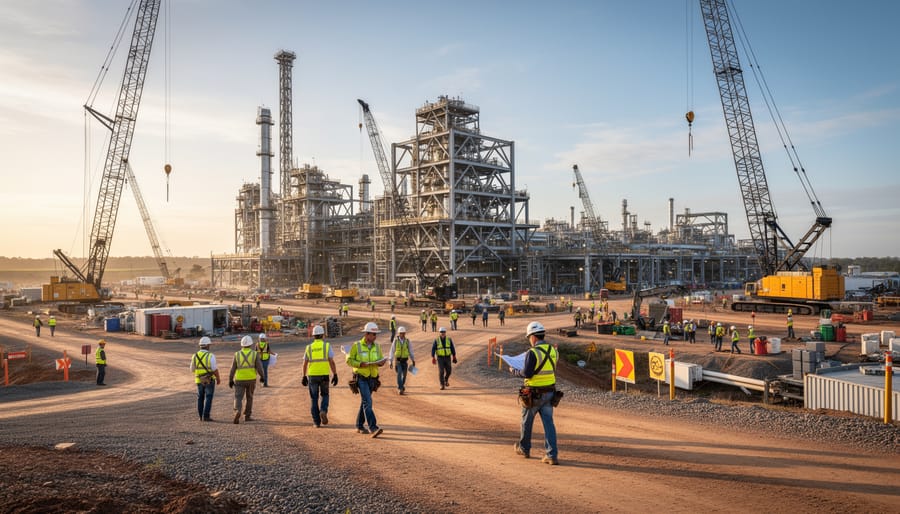
Canada’s most ambitious carbon capture infrastructure plan became official this summer when Alberta and the federal government formalized their commitment to the Pathways Project. The July 2 Pathways MOU signed between the two levels of government and five major oilsands producers marks the first concrete step toward building what will become Canada’s largest carbon transportation and storage network.
The scale of this construction undertaking is substantial. Pathways aims to connect 20 separate oilfield CCS sites across Alberta, creating an integrated system designed to capture emissions at the source, transport them through an extensive pipeline network, and sequester them in deep geological formations. When fully operational, the network will handle a 6 million tonnes mid-2030s capacity of captured carbon dioxide annually.
The financing structure breaks new ground in Canadian resource development. The project operates as an equal Canada, Alberta partnership with both governments sharing the costs and decision-making authority equally. Critically, the agreement reserves a meaningful equity stake for Indigenous Peoples, allowing affected First Nations and Métis communities to become partners rather than simply adjacent stakeholders.
Indigenous consultations began immediately after the signing, recognizing that much of the planned infrastructure will cross or sit near treaty lands and traditional territories. These discussions will shape where pipelines run, how construction proceeds, and what long-term economic benefits flow to Indigenous communities in oilsands regions.
For property owners in northern Alberta, this means substantial construction activity will unfold over the next several years as companies build capture facilities at production sites, lay hundreds of kilometres of pipeline, and develop injection wells for permanent storage. The five oilsands producers involved, Canadian Natural Resources, Cenovus Energy, ConocoPhillips Canada, Imperial Oil, and Suncor Energy, operate across a vast geographic area stretching from Fort McMurray to Cold Lake, meaning the construction footprint will touch multiple communities and districts.
This is not abstract future planning. Mobilization for the first phases of construction will begin as regulatory approvals move forward, bringing jobs, equipment, and the inevitable disruptions that accompany major industrial infrastructure projects to resource communities where many homeowners and small business operators have already weathered decades of boom-and-bust cycles.
How Industrial CCS Construction Affects Local Communities
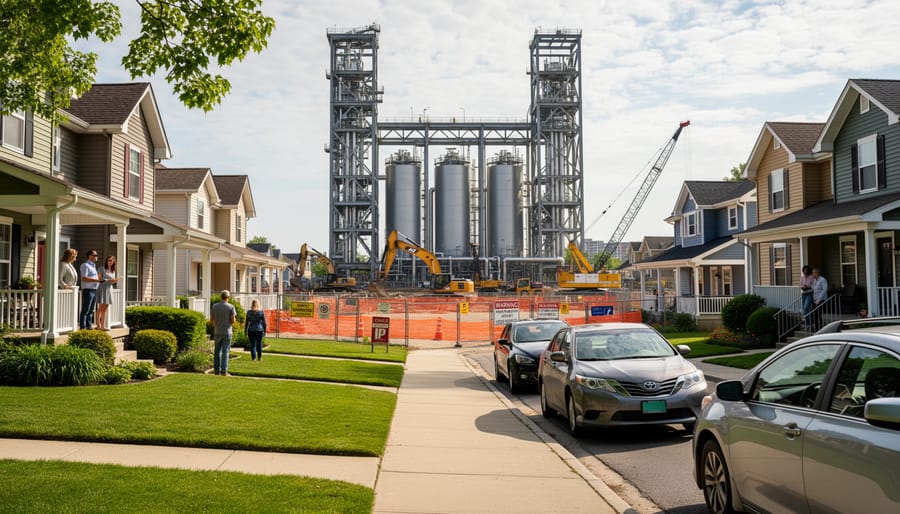
When large-scale industrial construction arrives in a community, the effects ripple outward in ways both immediately visible and economically complex. Property owners in resource-sector regions need to understand what changes accompany projects like the Pathways CCS development, which will link 20 different oilfield sites across Alberta with infrastructure capable of moving 6 million tonnes of captured CO2 annually by the mid-2030s.
The construction phase brings predictable disruptions that communities experience firsthand:
- Heavy truck traffic on local roads, accelerating wear on municipal infrastructure and residential streets
- Temporary road closures or detours that extend commute times and complicate delivery access
- Increased dust, noise, and vibration during foundation work and pipeline installation
- Strain on local accommodations as workers temporarily relocate to the area
- Higher demand for local services, from restaurants to vehicle repair shops
These disruptions typically intensify during peak construction periods, then gradually diminish as projects move toward operational phases. The timeline matters: with the Pathways memorandum of understanding signed July 2 and Indigenous consultations beginning immediately, affected communities can expect phased activity over several years rather than a sudden, concentrated burst of construction.
The economic picture carries more nuance. Jobs emerge during construction, equipment operators, welders, electricians, and support staff, though many specialized positions draw workers from outside the immediate area. Long-term operational employment tends to be smaller than construction-phase numbers but provides more stable, ongoing opportunities. Local businesses often see increased revenue during construction, though this boost can create its own challenges when demand suddenly drops after project completion.
Property values in proximity to industrial infrastructure follow unpredictable patterns. Some areas see appreciation from economic activity and improved services, while others experience downward pressure from industrial proximity. The equal partnership structure between Canada and Alberta, with meaningful Indigenous equity stakes in Pathways, represents an attempt to distribute economic benefits more broadly than traditional industrial development models.
Property Considerations When CCS Infrastructure Comes to Your Region
Protecting Your Property During Nearby Construction
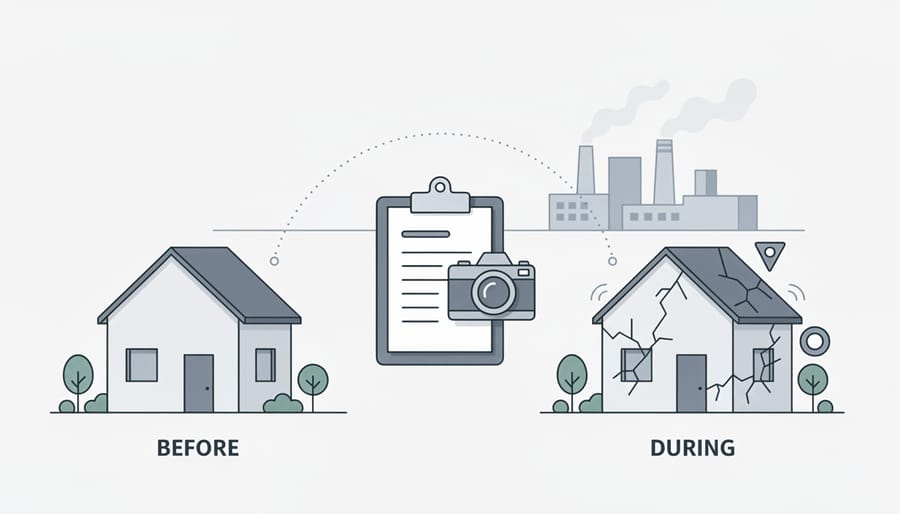
When major industrial construction begins near your property, proactive monitoring protects your investment and strengthens your position if damage occurs. Property owners in areas affected by large-scale projects like the Pathways CCS initiative should establish a documentation and inspection routine before ground breaks.
Start with a comprehensive baseline assessment. Photograph every exterior surface of your building, paying particular attention to vulnerable areas like chimney flashing roof edges, foundation walls, and windows. Date-stamp these images and store them securely. Walk your property’s perimeter and note existing cracks, settling, or wear in a written log.
- Document your property’s current condition with timestamped photographs of all exterior surfaces, focusing on roofing, foundation, and structural elements.
- Conduct weekly visual inspections during active construction phases, checking for new cracks, vibration damage, or debris accumulation.
- Record construction activity in a dated log, noting heavy equipment use, blasting schedules, and unusual vibrations you notice inside your home.
- Contact your insurance provider immediately if you observe new damage, before attempting repairs.
Schedule regular inspections throughout the construction period. Weekly visual checks during peak activity phases help you catch problems early. Look for fresh cracks in exterior walls, separated joints, roof material displacement, or changes in how doors and windows operate. These signs often indicate vibration or settling issues caused by nearby work.
Contact your insurance provider as soon as you notice potential construction impacts. Document the timeline between when construction began and when damage appeared. Professional assessment becomes critical at this stage. Companies experienced in construction-related claims can evaluate whether damage stems from industrial activity and help you present a well-supported claim to your insurer.
Insurance Claims Related to Construction Impact
When large-scale construction near your property causes damage, whether cracked foundations from vibration, roof damage from increased traffic, or structural issues from ground settlement, filing insurance claims requires specific documentation. Property owners need dated photographs showing pre-existing conditions, records of when construction activity began, and detailed documentation of any new damage as it appears.
The claims process becomes more complex when damage stems from industrial projects rather than weather events. Insurance providers often require proof that construction activity directly caused the damage, which means maintaining a timeline of nearby work and corresponding property changes. Canadian Roofs & Co. helps property owners in resource communities navigate these claims by conducting professional damage assessments, documenting construction-related wear accurately, and providing expert reports that substantiate claims with technical evidence insurers require.
Having professional support matters particularly when dealing with gradual damage that accumulates over months of heavy construction rather than a single incident. Our experience with construction-impact claims helps property owners present their cases effectively, ensuring legitimate damage doesn’t go uncompensated because of documentation gaps or unclear causation.
Industry Events and Resources for 2026
Property owners who want to stay informed about CCS construction developments in their regions have several practical resources available. Carbon Capture Canada 2026, taking place September 15-17, brings together industry leaders, government officials, and community stakeholders to discuss current and planned carbon capture projects across the country. While this conference primarily serves industry professionals, the event often releases public information about project timelines and community impact assessments that property owners can access.
Beyond industry conferences, your municipal and provincial government websites regularly post notices about upcoming industrial construction projects, including environmental assessments and community consultation schedules. These notifications let property owners know when CCS infrastructure development might affect their areas, often months before construction begins. Many provinces also maintain construction project databases that track timelines alongside other industrial activities and construction shutdowns that could impact local communities.
Local chambers of commerce and business associations frequently share updates about major infrastructure projects, including how they’ll affect traffic patterns, utility access, and property access during construction phases. Subscribing to these organizations’ newsletters ensures you receive timely information specific to your community rather than general industry news.
Canada’s shift toward carbon capture infrastructure is creating new industrial realities that will touch communities across resource-producing regions. The Pathways Project and similar developments represent substantial construction undertakings, and property owners in affected areas should stay informed about how these changes unfold near their homes and businesses.
Understanding what’s happening, when major construction phases are planned, and how industrial activity might affect your property puts you in a stronger position to protect your investment. Simple steps like documenting your property’s condition before nearby work begins, monitoring for construction-related impacts, and knowing when to call in professional assessments can prevent small issues from becoming costly problems.
Canadian Roofs & Co. works with property owners facing all types of construction-related challenges in their communities. Whether you’re dealing with vibration concerns, increased dust exposure, or need guidance on construction impact insurance claims, we bring the same expertise and community commitment to industrial-adjacent properties as we do to storm damage and renovation projects. We understand how large-scale developments affect buildings, and we know how to help you navigate the practical realities.
As CCS construction advances through 2026 and beyond, staying proactive about your property’s protection makes good sense. Awareness combined with the right professional support helps you manage these changes confidently, whatever industrial developments come to your region.