
Stamped Concrete Mississauga: Costs, Patterns, and Installation for 2026
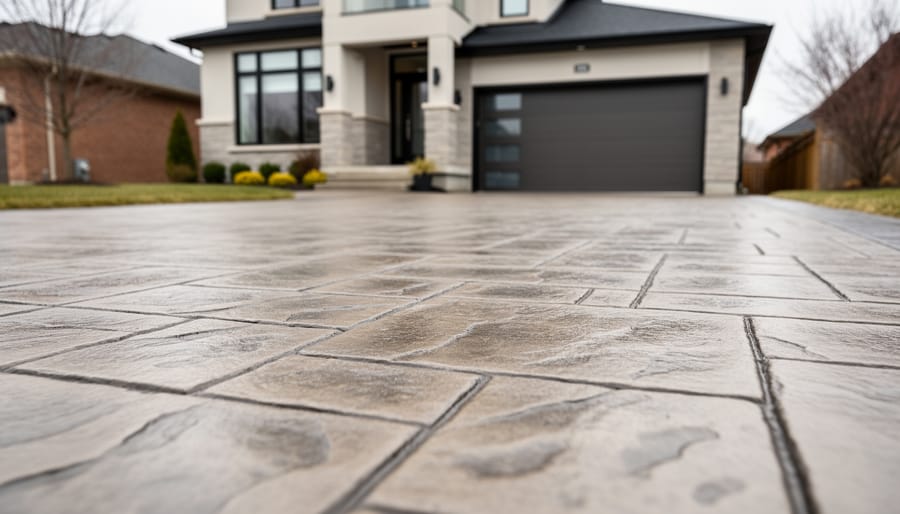
Stamped concrete transforms ordinary concrete into realistic replicas of brick, stone, slate, or wood at roughly half the cost of natural materials. For Mississauga homeowners, it delivers upscale curb appeal and durability suited to Ontario’s freeze-thaw cycles, with professionally installed driveways and patios typically ranging from $12 to $22 per square foot in 2026. The decorative technique involves pouring concrete, then pressing textured mats into the surface before it fully cures, creating patterns that withstand local weather extremes far better than many traditional pavers.
Mississauga’s climate presents specific challenges that stamped concrete handles exceptionally well when installed correctly. Winter temperatures routinely dip below freezing, causing moisture trapped in porous materials to expand and crack. Quality stamped installations include proper base preparation, steel reinforcement, and sealed surfaces that resist salt damage from de-icing treatments common throughout the region. This combination of aesthetic flexibility and structural resilience explains why the material has become increasingly popular for residential projects across the GTA.
Choosing the right contractor matters significantly. Proper installation requires specialized knowledge of mix ratios, curing times, and sealing schedules specific to Southern Ontario conditions. Homeowners benefit from understanding not just what stamped concrete offers, but how local contractors price their work, which patterns suit different applications, and what maintenance commitments preserve the investment long-term. This guide addresses each consideration with practical information for stamped concrete mississauga projects.
What Is Stamped Concrete and How Does It Work?
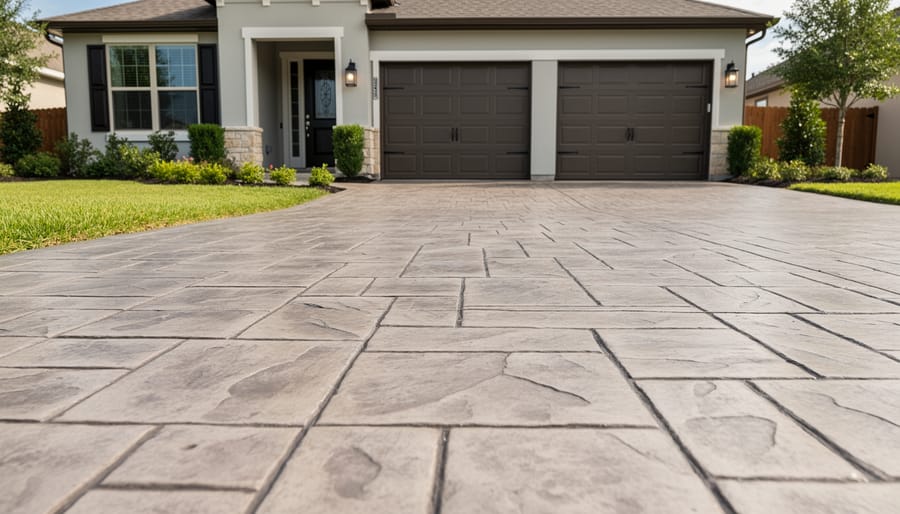
Stamped concrete transforms ordinary concrete into a decorative surface that replicates the look of premium materials. Contractors pour a concrete slab, then press specialized stamps into the surface while it’s still workable, creating realistic textures and patterns that mimic flagstone, slate, brick, cobblestone, or even wood planks. The result is a durable surface with the visual appeal of expensive natural materials at 40-60% less cost.
The installation process starts with site preparation and base grading to ensure proper drainage and stability. Contractors pour the concrete mix to the required thickness, typically 4-6 inches for residential applications. Before the concrete fully hardens, they apply color through integral pigments mixed into the concrete or surface color hardeners broadcast on top. This dual coloring approach creates depth and variation that looks authentically natural.
Timing is critical during stamping. Workers press large textured mats or individual stamps into the concrete surface when it reaches the right consistency, firm enough to hold the pattern but pliable enough to accept detailed impressions. They carefully position each stamp to create continuous patterns without obvious repetition. Release agents prevent the stamps from sticking and add subtle color variations that enhance realism.
After the concrete cures for several days, contractors apply a protective sealer. This final step locks in the color, enhances the surface sheen, and protects against moisture penetration, stains, and wear from foot traffic or vehicles. Quality sealers also provide UV resistance to prevent color fading over time. The sealed surface combines the strength and longevity of concrete with visual appeal that rivals natural stone or premium pavers, making it an increasingly popular choice for Mississauga driveways, patios, pool decks, and walkways.
Popular Stamped Concrete Patterns and Styles in Mississauga
Color Options and Customization
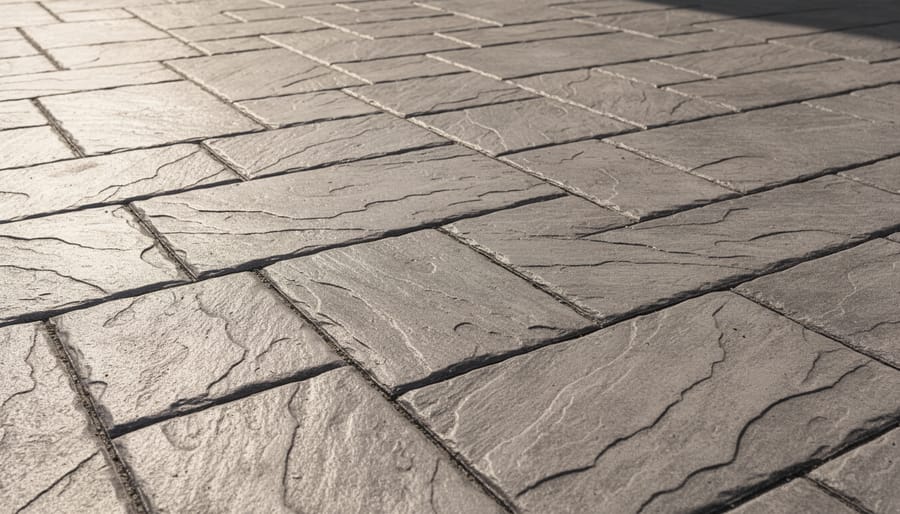
Color choices transform stamped concrete from a simple gray slab into a custom design element that enhances your property’s entire aesthetic. In Mississauga, homeowners typically select between two coloring methods, each offering distinct advantages for different project goals.
Integral color mixes pigment throughout the entire concrete batch, creating consistent color that won’t wear away with traffic. This method works well for driveways and high-traffic areas where surface abrasion might expose gray concrete beneath. The color remains uniform even if chips or cracks develop over time. Surface color hardeners, applied during installation, create richer, more varied tones that better mimic natural stone. These hardeners allow for layering multiple shades to achieve depth and realistic stone texture, making them popular for patios and walkways where visual impact matters more than heavy wear resistance.
Canadian properties typically feature earth tones that complement both natural surroundings and traditional architecture. Warm browns, tans, charcoal grays, and sandstone hues dominate local projects. Reddish-brown tones suit brick homes, while cooler grays coordinate with stone exteriors and contemporary designs. Your contractor can combine base colors with accent shades to create natural variation, mimicking how real flagstone or slate displays subtle color shifts across its surface.
Consider your home’s brick color, siding tones, and existing hardscaping when selecting stamped concrete colors. The goal isn’t perfect matching but harmonious coordination. Many Mississauga homeowners choose colors one or two shades lighter or darker than their home’s primary exterior color, creating visual interest while maintaining cohesion with the overall property design.
Stamped Concrete Costs in Mississauga for 2026
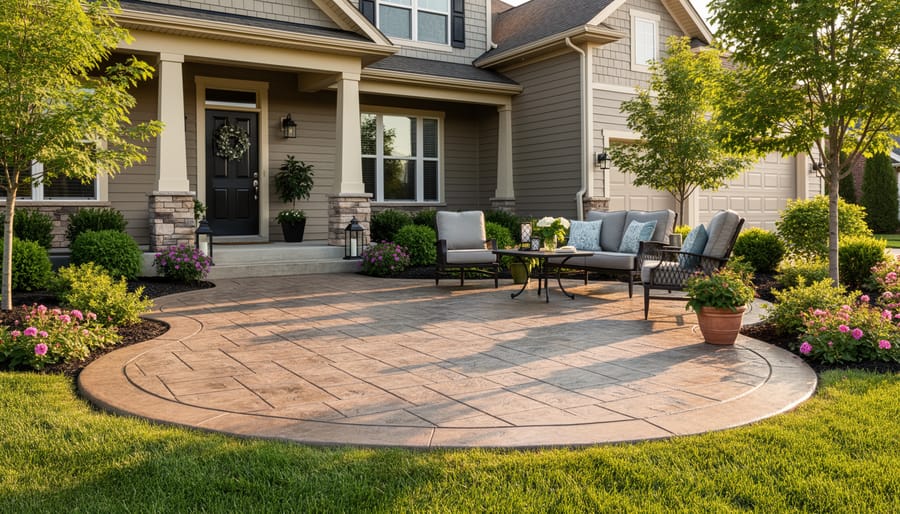
What Affects Your Project Cost?
Several factors beyond the base square-foot price determine your final stamped concrete bill in Mississauga. If you have an old concrete driveway or patio that needs removal before installation, expect to add $3 to $7 per square foot for demolition and disposal, haul-away costs vary with the thickness of the existing slab and local dump fees. Projects requiring extensive excavation or poor soil stabilization add more; clay-heavy soil common in parts of Mississauga sometimes needs extra gravel base or compaction work to prevent future settling.
Site accessibility plays a bigger role than many homeowners anticipate. A backyard patio with narrow side-yard access forces contractors to wheelbarrow concrete mix and equipment through tight spaces, increasing labor hours and overall cost. Front driveways with direct street access cost less because concrete trucks can pour directly from the curb. Sloped sites need additional formwork and careful grading, which adds time and materials.
Design complexity directly affects pricing. A single-pattern, one-color driveway costs significantly less than a multi-pattern patio with contrasting borders, hand-tooled joints, and saw-cut control lines. Each additional color requires separate application and stamping, raising both material and labor charges. Intricate patterns like European fan or random stone demand more skill and time than straightforward running-bond brick stamps.
Border treatments and accent features increase costs but add visual impact. Contrasting border bands in a different pattern or color typically add $8 to $15 per linear foot. Hand-tooled texture work, custom scoring, or stained accents each carry additional charges. When budgeting, similar to how a Canadian cost comparison reveals price variations across property improvements, stamped concrete quotes reflect these cumulative choices rather than a simple per-square-foot calculation. Understanding these variables helps you prioritize features that matter most for your project’s look and budget.
Durability and Performance in Mississauga’s Climate
Mississauga’s climate poses real challenges for outdoor concrete surfaces. Stamped concrete can last 25 years or more here when installed correctly, but longevity depends entirely on how the contractor handles freeze-thaw protection and moisture management.
The freeze-thaw cycle is the biggest threat. When water penetrates concrete and freezes, it expands by roughly nine percent, creating internal pressure that cracks the surface. Mississauga typically experiences 80 to 100 freeze-thaw cycles per winter. Proper installation starts with a minimum four-inch base of compacted granular material and at least four inches of concrete reinforced with wire mesh or rebar. The mix itself needs an air content of five to seven percent, creating microscopic air pockets that give expanding ice somewhere to go without fracturing the slab.
De-icing salts accelerate surface deterioration if the concrete is not protected. Calcium chloride and magnesium chloride penetrate unsealed concrete and cause scaling, pitting, and color fading within two to three winters. A high-quality penetrating sealer applied after the concrete fully cures creates a barrier against salt and moisture. Resealing every two to three years maintains this protection, especially on driveways where salt exposure is constant.
Quality sealers separate successful installations from premature failures. Acrylic sealers offer UV resistance and enhance color but typically last 18 to 24 months. Polyurethane and epoxy sealers provide stronger chemical resistance and can last three to five years, though they cost more upfront. The sealer should go down after the concrete cures for at least 28 days, never rushed to meet project deadlines.
Snow removal practices matter as much as installation quality. Metal shovels and aggressive plowing gouge stamped patterns and chip edges. Plastic shovels and snow blowers with adjustable skid shoes protect the surface. Avoid salt-based ice melters during the first winter, allowing the concrete to strengthen fully before chemical exposure.
Temperature swings also stress the surface. Mississauga sees winter lows near minus 20 degrees Celsius and summer highs above 30 degrees, causing concrete to expand and contract. Control joints cut into the slab accommodate this movement, preventing random cracking. Proper curing during installation builds internal strength that handles thermal stress better, which ties directly to Canadian weather durability standards for outdoor hardscaping.
The Installation Process: What to Expect
Understanding what happens during a stamped concrete installation helps you prepare your property and set realistic expectations. Most Mississauga projects follow a similar sequence, though weather and site conditions can affect timing.
Your contractor will start with an on-site consultation to assess the area, discuss pattern and color choices, and identify any drainage or grading issues that need addressing. This initial visit typically includes measurements for an accurate quote and a discussion of your timeline.
Once you’ve approved the project, the installation unfolds in these stages:
- Site preparation and excavation, Removing existing surfaces if necessary, grading for proper drainage, and compacting the subgrade to create a stable foundation
- Base installation, Adding and compacting a granular base (typically 4-6 inches of crushed stone) to support the concrete and prevent settling
- Forming and reinforcement, Setting forms to define the area’s edges and installing wire mesh or rebar for structural strength
- Concrete pouring, Placing fresh concrete at the proper thickness (usually 4 inches for patios, 6 inches for driveways) and screeding it level
- Color application, Broadcasting color hardener onto the surface or working integral color into the mix, depending on your design choice
- Stamping, Pressing texture mats into the concrete while it’s still workable, creating the pattern and relief that mimics natural materials
- Detailing and touch-ups, Hand-tooling edges, adding grout lines if needed, and refining the texture for a natural appearance
- Curing and sealing, Allowing the concrete to cure (typically 48-72 hours), then applying a protective sealer once fully set
Weather plays a significant role in scheduling. Contractors avoid installing stamped concrete when temperatures drop below 10°C or during rain, as both conditions affect curing and finishing quality. Late spring through early fall offers the most reliable conditions in Mississauga.
The actual stamping work happens quickly, often completed in a single day for most residential projects. However, you’ll need patience afterward. The concrete requires at least 24 hours before light foot traffic and a full week before vehicles can drive on it. Proper curing prevents cracking and ensures the surface reaches full strength. Rushing this phase compromises durability, much like inadequate preparation can prevent water damage in other exterior installations.
Most contractors apply the initial sealer within a few days of installation, with the surface fully ready for normal use after seven to ten days. Your contractor will provide specific care instructions for the first month while the concrete continues hardening.
Maintenance and Long-Term Care
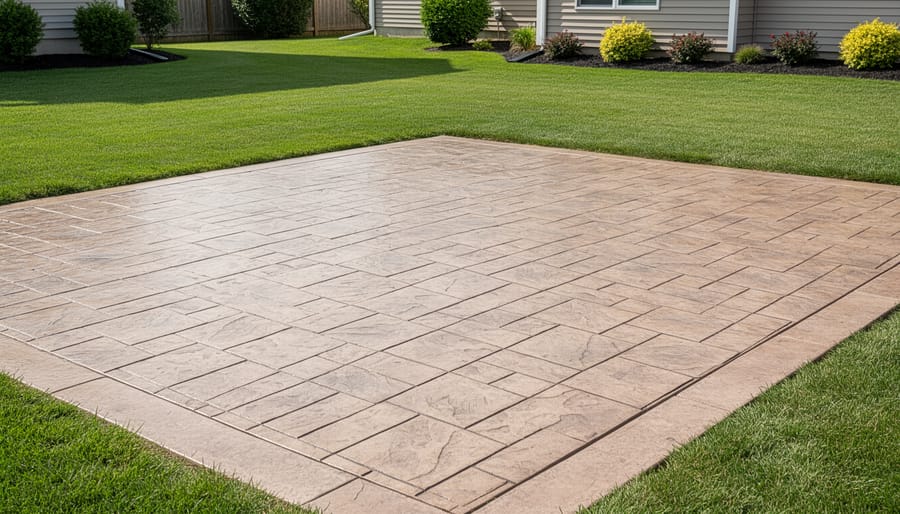
Stamped concrete requires minimal upkeep to maintain its appearance and structural integrity, especially when compared to natural stone pavers that can shift or interlocking brick that needs periodic releveling. A basic maintenance routine keeps your investment looking sharp for decades.
Regular cleaning is straightforward. Sweep debris weekly and hose down the surface as needed. For deeper cleaning, use a mild degreaser mixed with water and a soft-bristle broom, avoid harsh chemicals that can break down the sealer. Oil stains from vehicles come up easily when treated promptly with a commercial concrete degreaser.
Resealing stands as your most important maintenance task. Mississauga’s freeze-thaw cycles demand that you reseal every two to three years, depending on traffic and exposure. The sealer protects against moisture penetration, prevents colour fading from UV exposure, and makes snow removal easier. Watch for water no longer beading on the surface, that’s your signal to reseal. Most contractors can handle this in a single afternoon once the surface is cleaned and dried.
Winter care requires some attention. Use calcium magnesium acetate ice melters rather than rock salt, which can damage both the concrete and the sealer. Plastic-edged shovels prevent surface scratches better than metal ones. Sand provides traction without chemical risks.
Minor hairline cracks happen as concrete settles naturally. Small cracks can be filled with flexible concrete caulk that matches your colour. For more significant damage like spalling or large cracks, contact a professional to assess whether the issue stems from improper installation, inadequate base preparation, or normal wear that needs targeted repair.
Choosing a Stamped Concrete Contractor in Mississauga
Selecting the right contractor separates a beautiful, long-lasting stamped concrete installation from a premature repair project. Start by verifying that candidates specialize in decorative concrete specifically, not just general concrete work. Stamping requires different skills and equipment than standard flatwork, and experience with intricate patterns, color application, and proper release agent use directly impacts your finished surface.
Request portfolios showing completed Mississauga projects, ideally with photos taken several years after installation. This reveals how their work weathers local conditions. Ask to see examples matching your intended application, driveways demand different reinforcement and thickness than patios. A contractor familiar with the Greater Toronto Area understands soil conditions, proper base preparation for freeze-thaw stability, and drainage requirements that prevent water pooling and ice damage.
Confirm the contractor carries both liability insurance and WSIB coverage, protecting you from responsibility if accidents occur on your property. Request proof of these documents directly from the insurer rather than accepting photocopies. Check that they hold any required municipal permits and understand Mississauga building codes for setbacks, drainage, and surface materials.
Warranties matter significantly. Quality contractors typically offer minimum three-year workmanship guarantees covering installation defects, cracking from improper base work, and premature surface deterioration. Clarify what the warranty excludes, most won’t cover damage from improper maintenance, de-icing salt overuse, or surface impacts.
Ask about their sealing products and resealing services. Contractors who use premium penetrating sealers designed for Canadian winters and offer maintenance programs demonstrate long-term commitment to your project’s performance.
Established Mississauga contractors with reputations built on community relationships and comprehensive home improvement expertise often provide more reliable service than companies focusing solely on quick installations. Firms known for quality roofing and renovation work typically apply the same meticulous standards to concrete projects, understanding how all exterior surfaces must work together to protect your home and enhance its value.
Frequently Asked Questions
How long does stamped concrete last in Mississauga?
With proper installation and regular maintenance, stamped concrete typically lasts 25 to 30 years or longer. The key factors are quality installation with adequate base preparation, consistent resealing every 2-3 years, and proper winter care to protect against freeze-thaw damage.
Is stamped concrete slippery in winter?
Stamped concrete can be slippery when wet or icy, similar to most hard surfaces. Choosing textured patterns and applying non-slip sealers significantly improves traction, making it safer for driveways and walkways during Mississauga winters.
Can stamped concrete be installed over existing concrete?
Yes, contractors can apply a stamped concrete overlay over existing concrete that’s in good condition without major cracks or settling. The existing surface must be thoroughly cleaned and prepared, and the overlay typically adds about one to two inches of thickness.
What’s the best time of year to install stamped concrete in Mississauga?
Late spring through early fall offers ideal conditions, with consistent temperatures between 10°C and 30°C allowing proper curing. Avoid installation during periods of expected frost or extreme heat, as temperature fluctuations can compromise the finished surface.
Beyond these common concerns, homeowners often wonder about repair options when damage does occur. Small cracks can be filled with color-matched concrete repair compounds, while surface wear typically requires grinding and resealing rather than complete replacement. This repair flexibility represents a practical advantage over natural stone, where individual pavers may need replacement.
When comparing stamped concrete to alternatives like interlocking pavers or natural stone, consider your priorities. Pavers offer easier individual unit replacement but cost significantly more upfront and require ongoing maintenance to prevent weed growth and shifting. Natural stone provides authentic texture but carries premium pricing and can be prone to cracking in freeze-thaw cycles. Stamped concrete delivers the visual appeal of these materials at roughly half the cost, with a continuous surface that resists weed growth and requires less frequent maintenance once properly sealed.
The question of durability often centers on whether the decorative surface holds up to daily use. Quality stamped concrete maintains its pattern and color for decades when maintained properly, though high-traffic areas may show wear in the sealer rather than the concrete itself. This surface wear is easily addressed during routine resealing, making it a manageable aspect of ownership rather than a significant drawback.
Stamped concrete offers Mississauga homeowners a practical blend of durability, affordability, and aesthetic flexibility that stands up to our demanding climate. Whether you’re transforming a tired driveway, creating an inviting patio space, or upgrading walkways, this decorative option delivers the look of premium materials without the premium price tag or high maintenance burden.
As you plan your project, weigh your specific priorities: the architectural style of your home, your budget constraints, how you use outdoor spaces, and your willingness to commit to periodic resealing. The right pattern and color choices can dramatically enhance curb appeal while providing a functional surface that performs year after year through freeze-thaw cycles and heavy snow seasons.
Investing in quality exterior improvements like stamped concrete contributes directly to your property’s market value while creating outdoor spaces your family enjoys today. Strategic home value upgrades reflect well on the entire neighborhood. Canadian Roofs & Co. understands how comprehensive renovation projects strengthen community connections and long-term property investment. Choose experienced local contractors who respect both your vision and the unique demands of building in the Greater Toronto Area.